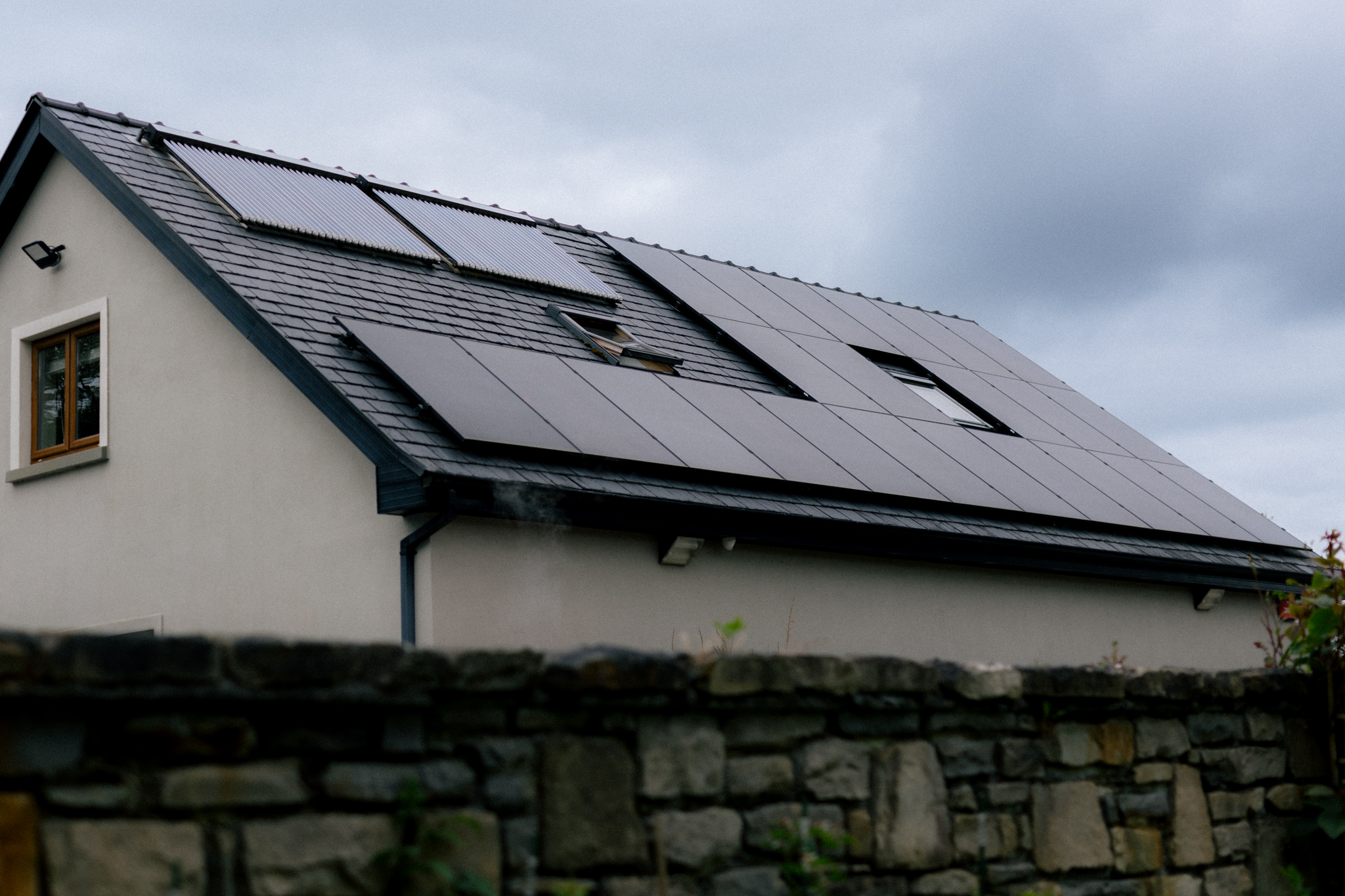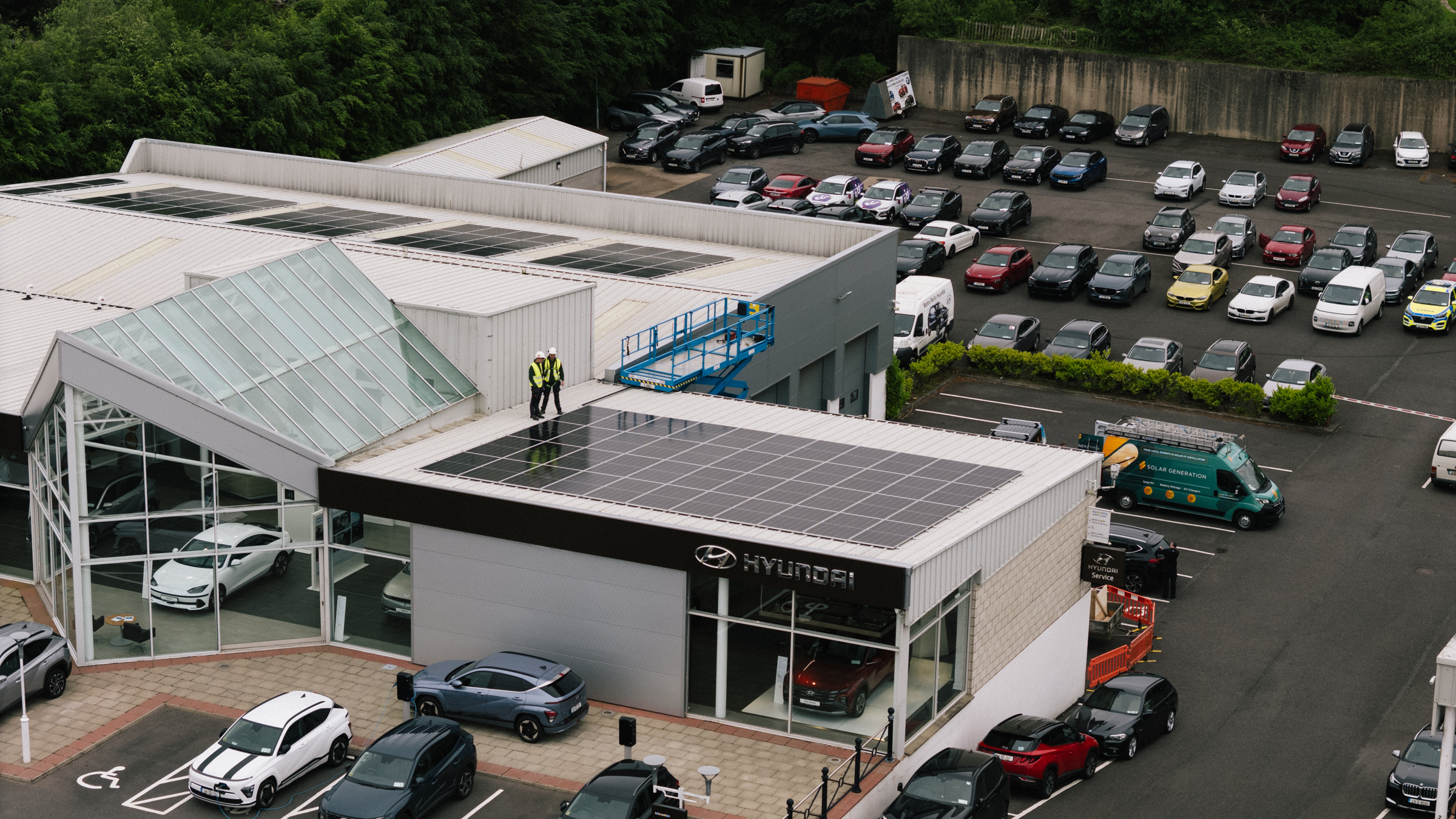
Not every home is built for roof panels. The pitch is wrong, the roof faces north, there is too much shade from trees, or there simply is not enough space. For a lot of homes across Sligo, Mayo, Donegal and Leitrim, the roof is the problem, not the location.
Ground-mounted solar panels are the alternative. Instead of working around a difficult roof, you site your panels in the garden, the yard, or across a field. You choose the angle. You choose the direction. And in most cases, ground-mounted solar panels in Ireland deliver better output than a compromised roof installation would have given you anyway.
Here is what you need to know before you go ahead.
What Are Ground-Mounted Solar Panels?
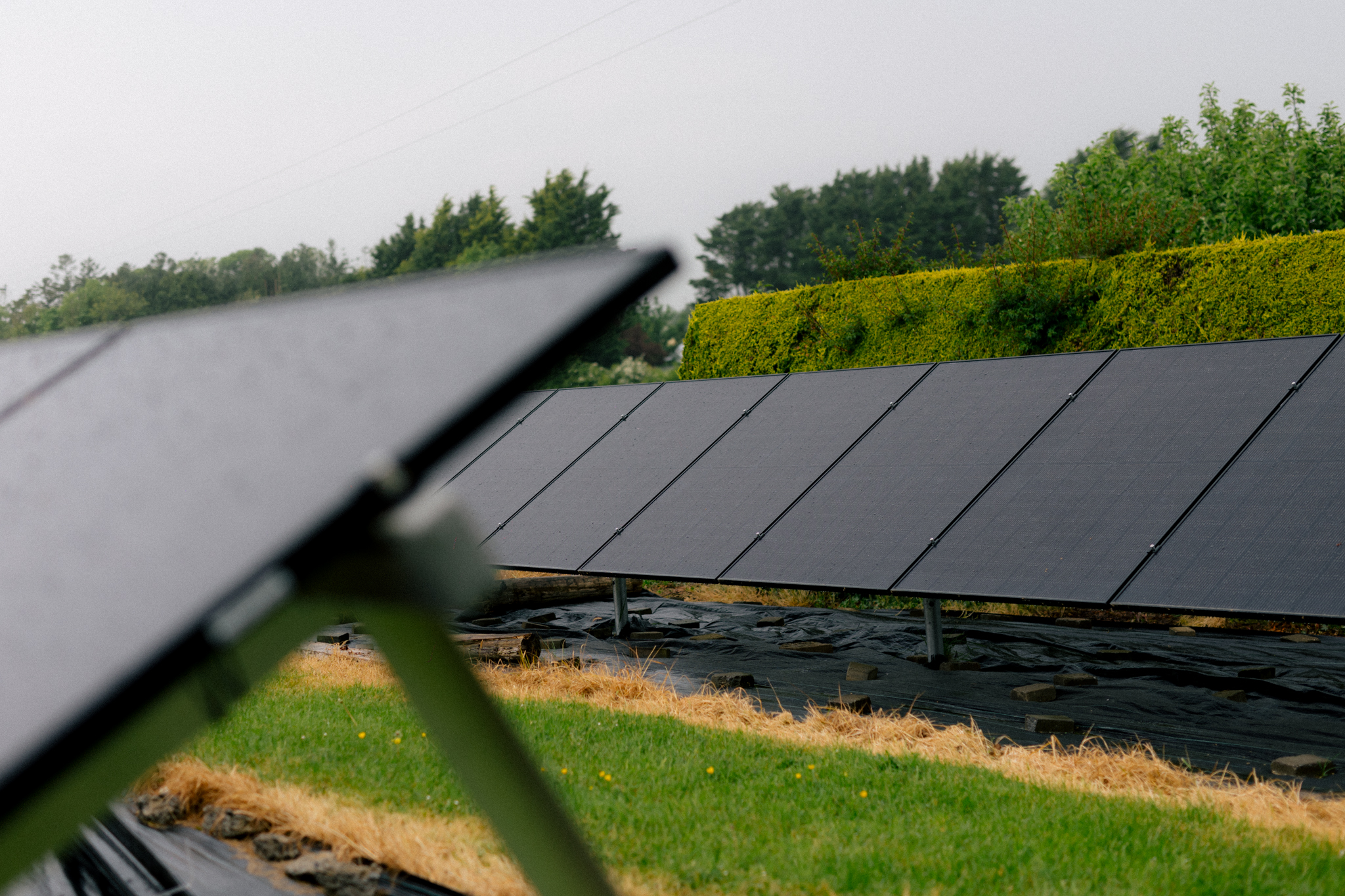
Ground-mounted solar panels are exactly what the name suggests. Instead of fixing panels to your roof, they sit on a metal frame anchored into the ground. The frame holds the panels at a fixed angle, usually between 25 and 35 degrees in Ireland, and you can orient them to face whatever direction maximises your generation.
For most installations in Ireland, that means south-facing at around 30 degrees. That combination captures the most sunlight across the full year and gets the closest to rated output.
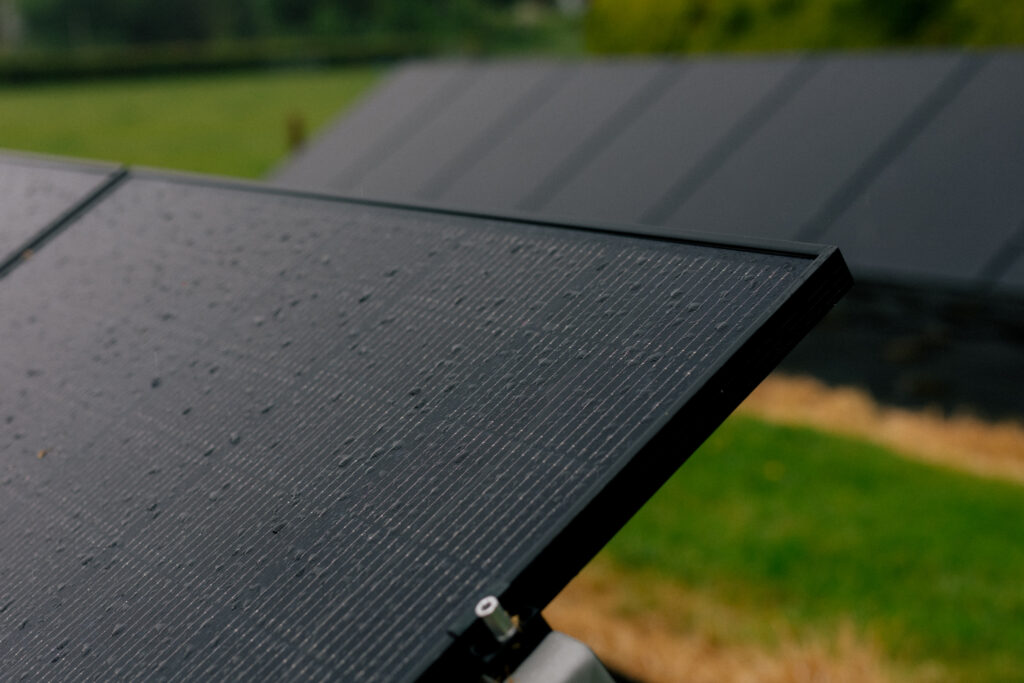
The panels themselves are identical to what goes on a roof. Same technology, same efficiency, same warranties. What changes is the mounting structure underneath them.
Who Actually Benefits from Ground-Mounted Solar?
There are a few situations where going ground-mounted makes more sense than a roof installation.
Your roof does not work. A north-facing roof, significant shading from trees or chimneys, a flat roof with drainage complications, or a roof structure that is due for replacement in the next few years. If the roof is not suitable, going around it is the right call.
You want a bigger system than your roof allows. A 3-bedroom semi-detached might have roof space for 10 or 12 panels. If your usage warrants more, maybe you have an EV, a heat pump, or you run a small business from home, a ground array lets you go bigger.
You have the space and want the best possible output. When you control the angle and orientation, you are not compromising. A well-sited ground array in a Sligo field pointing due south at 30 degrees will outperform an east-west split roof installation at the same size. Every time.
You are a farmer. Agricultural ground-mounted systems are one of the fastest-growing areas in the North West right now. Between the electricity demands of a working farm and the grant support available under TAMS 3, the numbers stack up well. We have covered solar panels for Irish farms in detail here.
Do You Need Planning Permission for Ground-Mounted Solar Panels?
This is the question most people ask first. The honest answer is: it depends.
Roof-mounted panels are exempt from planning in almost all residential cases. Ground-mounted systems sit in a greyer area. The position of the array on your property, its height, how visible it is from the road, and whether it is in a rear garden or at the front of the house all factor into whether planning applies.
A ground-mounted array in a rear garden, not visible from a public road and within reasonable size limits, is unlikely to attract attention in practice. A large array in a front garden or one that significantly alters the character of the site is a different matter.
Our advice is to talk to us before you talk to the planning office. We install ground-mounted systems regularly across Sligo, Mayo and Donegal and have a good sense of what works where. If there is any doubt, we will tell you.
For planning permission on roof-mounted systems, our guide to planning permission for solar panels in Ireland covers the full rules.
General planning guidance for Ireland is also available through Citizens Information.
Agricultural solar installations have their own planning rules and grant conditions. If you are looking at a farm installation, this guide on SEAI grants for commercial solar covers what applies.
How Much Space Do You Need?
A single standard solar panel in Ireland is roughly 1.7m by 1.1m. But you cannot just multiply that by your panel count and call it done. You need spacing.
Panels need to be spaced far enough apart that the front row does not shadow the rows behind it. In Ireland, with the sun sitting relatively low in the sky for much of the year, that spacing matters more than it would further south. A rule of thumb is to leave a gap equal to about two to three times the height of the panel as a distance between rows.
For a 10-panel ground array, you are typically looking at 20 to 30 square metres of usable ground, depending on the layout and the spacing chosen. Your installer will design the layout specifically for your site, your latitude, and the time of year when you want to maximise output.
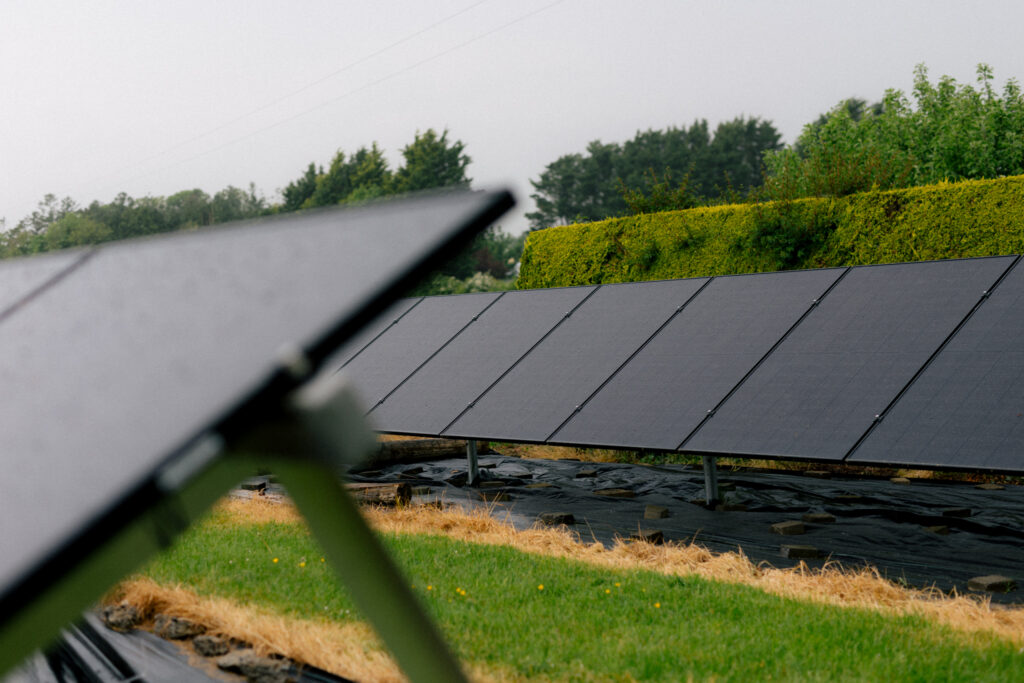
Ground preparation matters too. Most residential installations sit on ground screw anchors or concrete footings. No excavation required beyond what is needed to set the posts. The site needs to be reasonably level, or levelled as part of the job.
What Does a Ground-Mounted Solar System Cost in Ireland?
A ground-mounted solar installation costs more than a comparable roof installation. The difference is the mounting structure: the frame, posts, fixings and labour to set them. Expect to add roughly €1,500 to the cost of a roof installation of the same panel count, depending on the complexity of the ground conditions and the system design.
For full context on what solar systems cost across different sizes, our guide to solar panel costs in Ireland in 2026 breaks it down in detail.
SEAI Grant for Ground-Mounted Solar
Ground-mounted solar panels for residential properties are eligible for the SEAI solar PV grant, provided the system meets SEAI requirements and is installed by a registered installer. The grant is worth up to €1,800 depending on system size. Full details on the SEAI solar grant are here.
The grant effectively closes most of the gap between a ground-mounted and roof-mounted installation. After grant support, the additional cost of going ground-mounted is often less than people expect.
What Output Can You Expect in the North West?
This is where ground-mounted systems have a real advantage.
A roof installation in Sligo or Mayo works with whatever orientation the house was built to. That might be south-facing, which is ideal. It might be east-west, which gives you a flatter generation curve across the day. It might be slightly off south with partial shading. Whatever you have got, you are stuck with it.
A ground array has none of those constraints. You choose the orientation. In the North West, that means due south at around 30 degrees, the configuration that maximises annual generation in our latitude.
As we have covered in our guide to solar in the North West, a well-sited 4kW system in Sligo generates around 3,200 to 3,400 kWh annually. A ground-mounted system at the same size, optimally oriented, will sit at the higher end of that range or slightly above. You are extracting more from the same technology because you have removed the roof as a constraint.
On a practical day-to-day level, that means better generation through the shoulder months of March, April, September and October, when the sun sits lower in the sky and a south-facing tilt makes more difference.
Ground-Mounted vs Roof-Mounted: The Honest Comparison
Neither option is universally better. It depends on your situation.
Go roof-mounted if:
Your roof is south or south-west facing with minimal shading, is in good condition, and has enough space for the system size you need. A roof installation is simpler, cheaper, and does not need planning permission. For most homes, it is still the right starting point. Find out how many panels your roof needs here.
Go ground-mounted if:
Your roof is not suitable, you want a larger system than the roof allows, you have land available and want to optimise output, or you are a farmer looking at a more substantial installation.
Some homeowners do both if they’ve ran out of roof space for additional panels. A roof array handles the base load. A ground array in the garden or yard picks up the rest, particularly useful if you have added an EV charger or a heat pump and your electricity needs have jumped. A battery storage system tied to both arrays lets you store the surplus from both sources and use it in the evening.
Things Worth Knowing Before You Commit
Shading still matters on the ground. Trees to the south, a wall, a shed, anything that throws a shadow across the panels during the key generation hours of 10am to 3pm will reduce output. A site assessment will identify this. Do not skip it.
Access for maintenance. Ground arrays are easier to clean and inspect than roof-mounted panels. That is a genuine advantage. Budget 20 to 30 minutes once or twice a year to wash them down and check the connections are clean. For more on what maintenance actually involves, our solar panel maintenance guide covers it all.
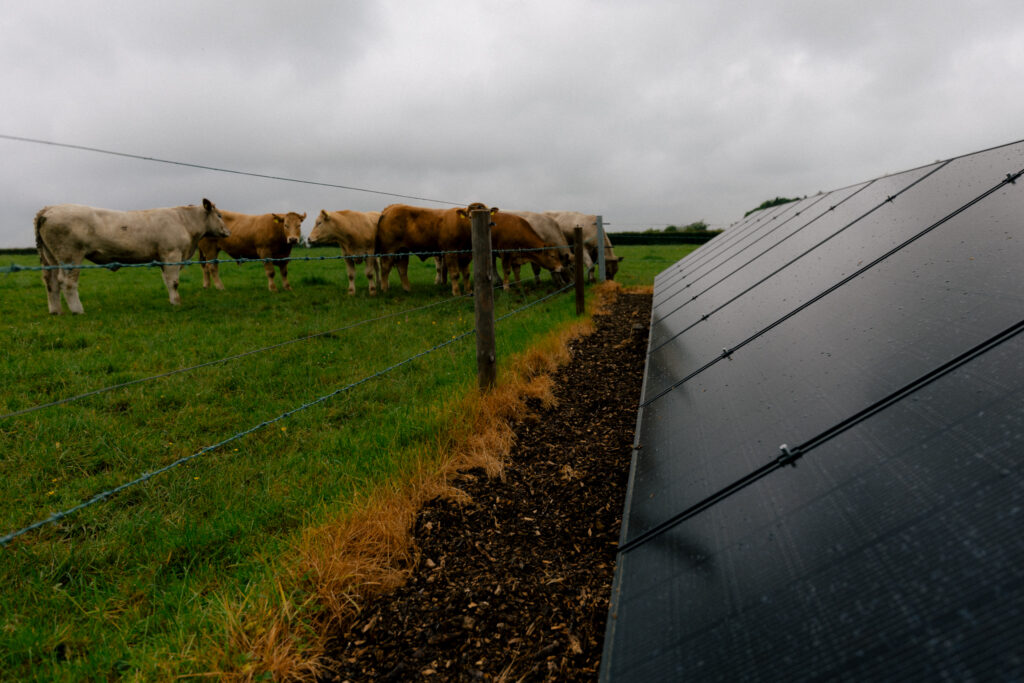
Animals. On farms and rural properties, panels need to be positioned or fenced to keep livestock away from the frame and cabling. This is straightforward to manage but worth planning for from the start.
Cable run to the house. The panels connect back to an inverter, which is typically installed inside the property. The longer the cable run from the ground array to the house, the more that cabling adds to the job. For most residential gardens this is a non-issue. For larger agricultural sites it is worth factoring in.
Is a Ground-Mounted Solar System Worth It?
For the right property, yes. A well-designed ground-mounted system in the North West will generate reliably for 25 to 30 years. The technology has not changed in any fundamental way that would make it obsolete in that time. Panels degrade at around 0.5% per year, so after 25 years you are still getting 87 to 88% of the rated output.
If your roof was the reason you had not gone ahead with solar, it probably does not have to be.
A site assessment will tell you whether a ground array is viable on your property, what size makes sense for your usage, and what the output is likely to be. We carry out those assessments across Sligo, Mayo, Donegal, Leitrim and Roscommon. There is no obligation.
Get in touch and we will come out to you.
Frequently Asked Questions
Do ground-mounted solar panels need planning permission in Ireland? In most cases, yes. Unlike roof-mounted panels, ground arrays are not automatically exempt from planning. The application is straightforward for most well-sited residential systems.
Are ground-mounted solar panels eligible for the SEAI grant? Yes, provided the system meets SEAI requirements and is installed by a registered installer. The grant is worth up to €1,800.
How much do ground-mounted solar panels cost in Ireland? Expect to pay roughly €1,500 more than a comparable roof installation, due to the mounting structure. A 4kW system in the North West typically costs €7,000 to €10,000 before grants.
Do ground-mounted panels produce more electricity than roof panels? They can, because you control the orientation and angle. A ground array pointing due south at 30 degrees in the North West will typically outperform a compromised roof installation at the same size.
How much space does a ground-mounted solar array need? A 10-panel array needs roughly 20 to 30 square metres of usable ground, including row spacing to prevent self-shading.
Solar Generation is a Sligo-based solar installation company serving the North West of Ireland. We are SEAI-registered and install with our own in-house crews. Learn more about us here.