Ireland now has a standalone grant for home battery storage. From 6 October 2026, the Sustainable Energy Authority of Ireland (SEAI) offers a €600 grant specifically for battery systems, separate from the existing solar PV grant. If you already have solar panels, you can apply for this grant on its own. If you are planning a new solar installation, you can combine both grants in a single application.
This article explains exactly how the grant works, who qualifies, what the application process looks like, and why adding battery storage makes a genuine difference to your electricity bills.
What Is the New SEAI Battery Storage Grant?
The SEAI launched a dedicated battery storage grant of €600 on 6 October 2026. It covers home battery systems with a minimum capacity of 5 kWh, and it forms part of the wider SEAI Solar Electricity Grant scheme.
There are two ways to access it:
- If you plan to install solar panels and a battery together, submit a single combined SEAI application for both grants.
- If you already have solar panels from an SEAI-registered installer, apply for the battery grant separately on its own.
In both cases, you must receive written grant approval — a Letter of Offer — from SEAI before any work begins. There are no exceptions to this rule. Starting work before approval disqualifies your claim entirely.
Once SEAI issues your Letter of Offer, you have eight months to complete the works.
Grant Amounts at a Glance
The battery grant sits alongside the existing solar PV grants. Together, they represent the most straightforward way to reduce the net cost of a full solar and storage system for your home.
| Grant Type | Amount |
|---|---|
| Solar PV, 2 kWp | €1,400 |
| Solar PV, 3 kWp | €1,600 |
| Solar PV, 4 kWp | €1,800 |
| Battery storage (min. 5 kWh) | €600 |
| Solar PV (4 kWp) + Battery | €2,400 |
In addition, a 0% VAT rate applies to solar panel and battery installation for homes, which reduces the overall cost further regardless of whether you claim a grant.
For a full breakdown of every grant available in Ireland right now, see our solar grants in Ireland 2026 overview.
Why Does a Battery Actually Matter?
This is the question worth spending time on, because many homeowners do not realise how much of their solar energy goes to waste without storage.
Solar panels generate electricity during daylight hours. However, the periods of highest household electricity demand — morning and evening — typically fall outside those peak generation hours. As a result, without a battery, any solar electricity you do not use at that moment goes directly to the grid. You receive a payment for that export through the Clean Export Guarantee (typically 15 to 32 cent per kWh), but that rate is significantly lower than what you pay to import electricity from the grid.
Consequently, a typical home without a battery self-consumes only around 30 to 40% of the solar energy its panels generate. The remainder goes to the grid at a lower rate.
Add a battery, and that figure rises to around 70 to 80%. Instead of exporting cheap electricity and buying expensive electricity later in the evening, your home charges the battery during the day and draws from it after dark. That shift is where the real financial benefit sits, and it is why the battery grant matters as much as the solar grant itself.
How SolaX Triple Power Batteries Work
Solar Generation installs SolaX Triple Power batteries alongside Luxor glass-glass solar panels. These are modular high-voltage batteries, and two modules together provide 5.5 kWh of usable capacity, comfortably meeting the SEAI minimum of 5 kWh required to qualify for the €600 battery grant. The system can expand further for homes with higher energy demand. These batteries use LFP (lithium iron phosphate) chemistry, giving a strong safety profile and a long cycle life compared to older battery technologies.
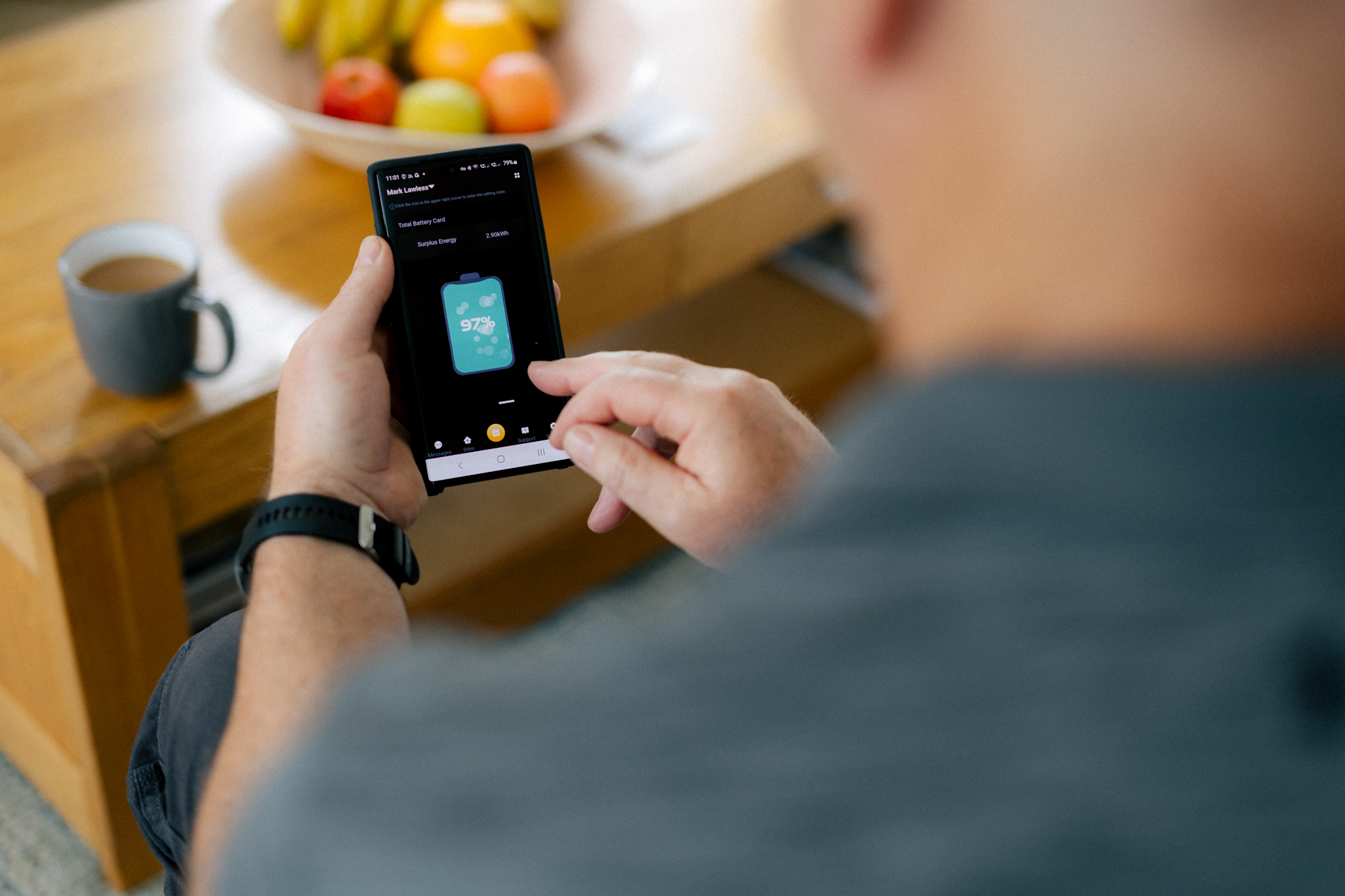
The SolaX Triple Power integrates directly with the SolaX inverter, manages charge and discharge automatically, and connects to a phone app for monitoring. During winter months, when solar generation is lower, you can also schedule the battery to charge from the grid overnight on cheaper off-peak tariffs, depending on your electricity plan.
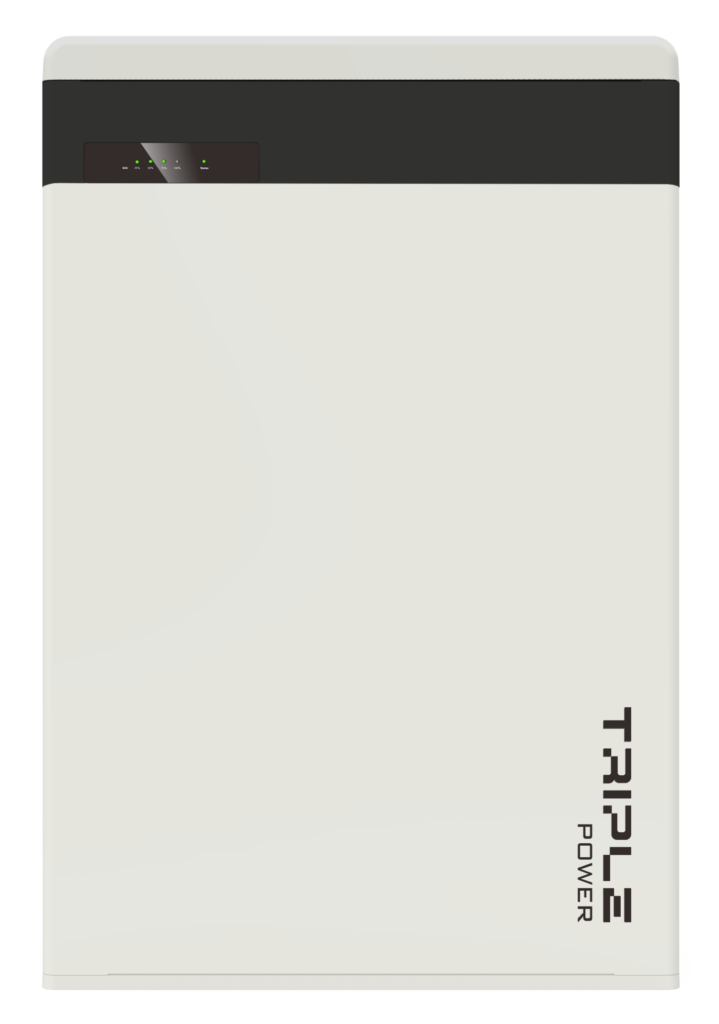
The SolaX system integrates directly with the SolaX inverter, manages charge and discharge automatically, and connects to a phone app for monitoring. During winter months, when solar generation is lower, you can also schedule the battery to charge from the grid overnight on cheaper off-peak tariffs, depending on your electricity plan.
For homes with higher energy demand, SolaX Triple Power units stack together to increase total capacity. Our team advises on the right size for your household during a free consultation. Get in touch with Solar Generation here.
Enhanced Grants for Lower-Income Households
For households receiving qualifying welfare payments, the SEAI offers significantly higher support. In fact, eligible households can claim up to €9,000 in grant aid, covering both a solar PV system and battery storage.
To qualify for the enhanced grant, your household must receive one of the following payments:
| Qualifying Payment | Notes |
|---|---|
| Fuel Allowance | No additional conditions |
| Working Family Payment | No additional conditions |
| Jobseeker’s Allowance | Over 6 months, with a child under 7 in the household |
| Disability Allowance | Over 6 months, with a child under 7 in the household |
| Domiciliary Care Allowance | No additional conditions |
| One-Parent Family Payment | No additional conditions |
| Carer’s Allowance | Carer must live with the person they care for |
| Rental Accommodation Scheme | Tenancy must be under the scheme |
If your household qualifies, the additional funding makes solar and battery storage substantially more accessible. Solar Generation handles the full application on your behalf, including confirming eligibility before you commit to anything. For a detailed look at these enhanced supports, see our solar panel grants in Ireland page.
Free Solar for Medically Vulnerable Households
Some households qualify for an even higher level of support. Specifically, households on the Priority Services Register under the life support category may qualify for a fully funded solar installation at no cost. The SEAI Free Solar Electricity scheme for medically vulnerable people covers a system up to 4 kWp and a battery up to 5 kWh.
If someone in your home depends on electrically powered medical equipment, it is worth checking whether you already appear on the Priority Services Register with your network operator. Solar Generation can help you understand your options if this applies to your situation.
How to Apply: The Process Step by Step
The application process is straightforward, and Solar Generation manages most of it on your behalf.
- Check that your home meets SEAI eligibility criteria. Your home must be owner-occupied and built and occupied before 2025 for most grants.
- Contact an SEAI-registered installer such as Solar Generation for a quote and eligibility check.
- Submit your application to SEAI through the online portal. If you want both solar and battery, submit a single combined application.
- Wait for your Letter of Offer from SEAI. Do not proceed with any works until it arrives.
- Arrange the installation within the eight-month window from the date of your Letter of Offer.
- Solar Generation completes the installation and submits all paperwork to SEAI on your behalf.
- SEAI pays the grant directly to Solar Generation, reducing your final invoice rather than requiring you to claim it back.
You can verify any contractor’s registration directly on the SEAI Find a Contractor tool.
What Solar Generation Installs
Solar Generation is based in Carraroe, Co. Sligo, and covers the north-west of Ireland across County Sligo, Mayo, Roscommon, Leitrim and Donegal. We install Luxor glass-glass solar panels, which carry a 30-year product warranty and perform reliably in Irish weather conditions, including coastal and exposed Atlantic-facing sites.
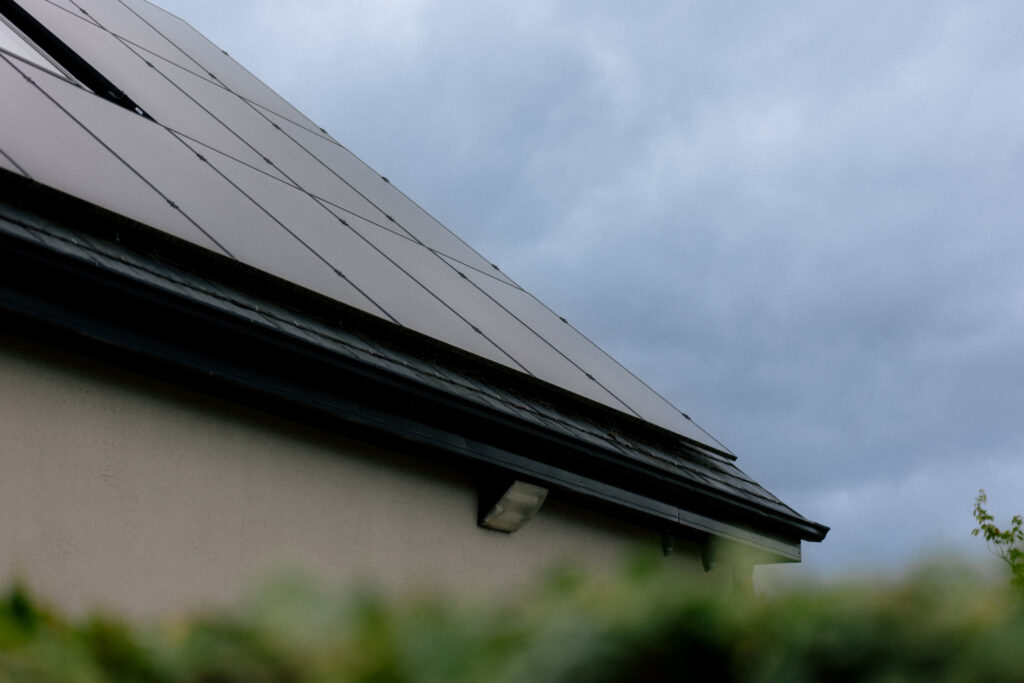
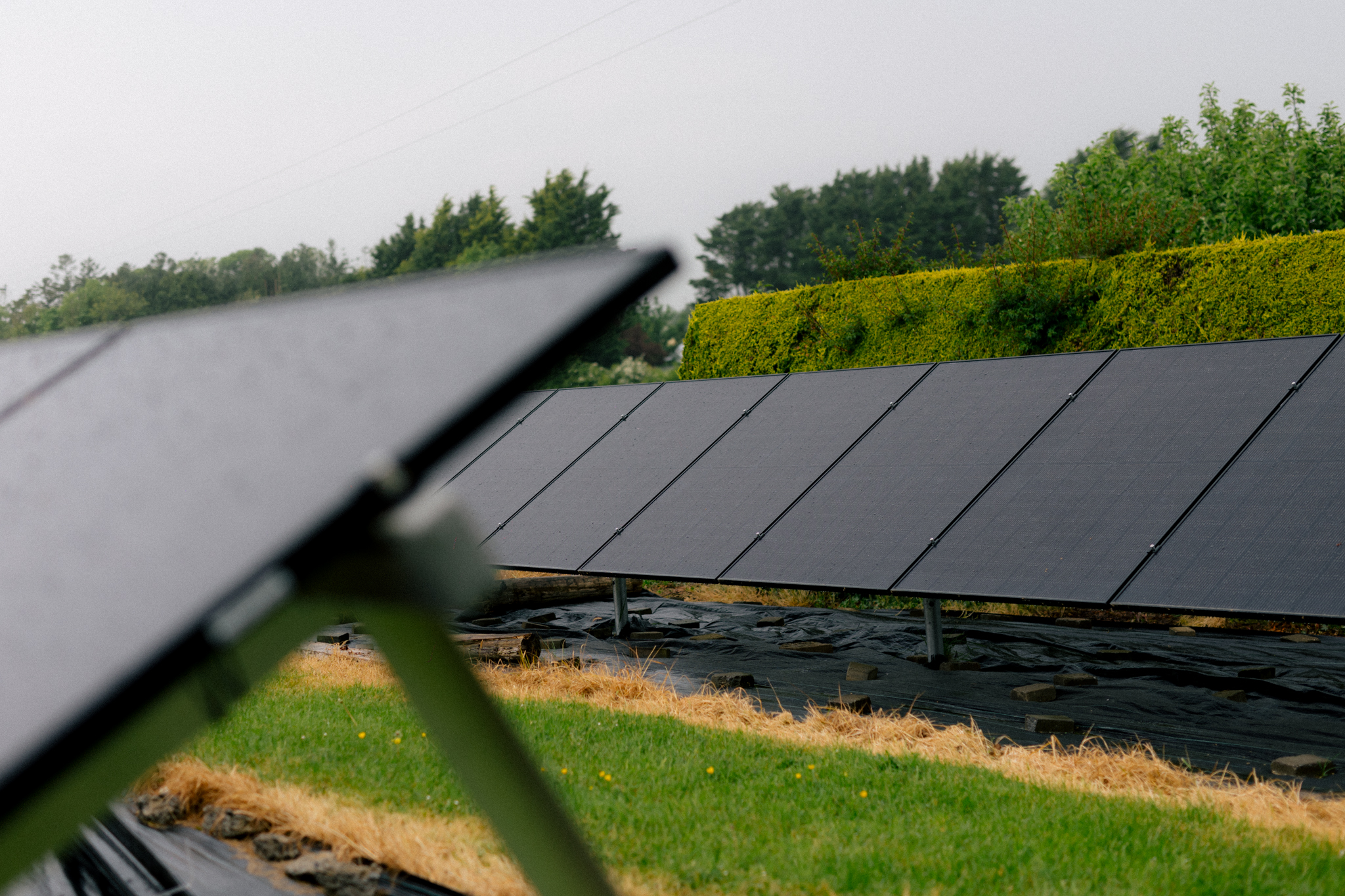
We pair these panels with SolaX inverters and SolaX Triple Power batteries, providing a fully integrated system with strong after-sales support. Every system we design reflects your household’s actual electricity usage rather than a generic template. For homes where roof space is limited or unsuitable, ground-mounted systems are also available. See our guide to ground-mounted solar panels in Ireland.
Frequently Asked Questions
Can I get the battery grant if I already have solar panels?
Yes. Provided your existing solar panels came from an SEAI-registered installer, you can apply for the €600 battery grant on its own. The battery must have a minimum capacity of 5 kWh and must come from a registered installer.
Do I need to apply for the battery grant before installation begins?
Yes, without exception. SEAI must issue a Letter of Offer before any work starts. If you install first and apply afterwards, you will not receive the grant.
What size battery do I need to qualify?
The minimum is 5 kWh of usable storage capacity. The SolaX Triple Power batteries Solar Generation installs start above this threshold. If you are unsure what size suits your home, we can advise based on your energy usage during a no-obligation consultation.
How long do I have to complete the installation after approval?
Eight months from the date of your Letter of Offer. In practice, this is generally enough time for installation to be scheduled and completed without difficulty.
Is there any VAT on solar or battery installation?
No. A 0% VAT rate applies to solar panel and battery installation in residential properties in Ireland. This applies regardless of whether you claim a grant, so every homeowner benefits.
What is the Clean Export Guarantee and does a battery affect it?
The Clean Export Guarantee (CEG) is a payment your electricity supplier makes for solar electricity you export to the grid. Rates typically range from 15 to 32 cent per kWh. With a battery, you export less because you store and use more yourself. In most cases this is financially beneficial, since the rate you pay to import electricity is higher than the CEG rate. As a result, storing more and exporting less puts more money back in your pocket overall. Further detail is available from Citizens Information.
Does Solar Generation cover my area?
Solar Generation covers Co. Sligo, Mayo, Roscommon, Leitrim and Donegal. Contact us to discuss your project.
Get a Quote from Solar Generation
If you live in the north-west of Ireland and want to add battery storage to your home, Solar Generation handles the full process from SEAI application through to completed installation.
Whether you are starting from scratch with a new solar and battery system, or adding a battery to panels you already have, contact Solar Generation to arrange a free site assessment and quote. We confirm your eligibility for the €600 battery grant — and any enhanced grants you may be entitled to — before you commit to anything.
Sources
- SEAI Solar Electricity Grant: https://www.seai.ie/grants/home-energy-grants/solar-electricity-grant/
- SEAI Free Solar for Medically Vulnerable Households: https://www.seai.ie/grants/home-energy-grants/free-solar-electricity-for-medically-vulnerable-people/
- SEAI Find a Registered Contractor: https://www.seai.ie/find-a-contractor/
- Citizens Information, Grants for Solar Panels: https://www.citizensinformation.ie/en/housing/housing-grants-and-schemes/grants-for-home-renovations-and-improvements/grants-for-solar-panels/