Ireland’s Non-Domestic Microgen Grant (NDMG) has just been significantly upgraded. From 6 October 2026, eligible organisations can claim 45% of the cost of a commercial solar installation, up from the previous rate of approximately 23%. The enhanced rate runs until 6 July 2027 only, after which applications revert to the standard rate. If your business, farm, school or community organisation has been considering solar, this nine-month window is the most favourable grant environment Ireland has seen for commercial solar.
This guide covers everything you need to know about the commercial solar grant Ireland, how to qualify, what the numbers look like, and how Solar Generation handles the full application process for clients across Co. Sligo, Mayo, Roscommon, Leitrim and Donegal.
What Is the NDMG and Who Is It For?
The Sustainable Energy Authority of Ireland (SEAI) administers the Non-Domestic Microgen Grant to help organisations outside the residential sector generate their own electricity from solar photovoltaic (PV) systems. The grant forms part of Ireland’s broader push toward energy affordability and renewable generation.
The National Energy Affordability Taskforce introduced the enhanced 45% rate from October 2026, reflecting the Government’s recognition that energy costs remain a significant burden on Irish businesses and public organisations.
The NDMG covers a wide range of applicants:
- Private businesses of all sizes and sectors
- Sole traders
- Primary and secondary schools, and third-level institutions
- Community centres and sports clubs
- Registered charities
- Public bodies and local authorities
- Agricultural enterprises (subject to conditions noted below)
If your organisation pays an electricity bill and owns or controls the building where the panels will go, there is a strong likelihood you qualify. The SEAI NDMG page is the definitive source for eligibility rules.
The Enhanced Rate: 45% Until 6 July 2027
The most important thing to understand about the current commercial solar grant Ireland is the timeline. The enhanced 45% rate applies exclusively to new applications submitted between 6 October 2026 and 6 July 2027. This is a fixed nine-month window under the National Energy Affordability Taskforce action plan.
Organisations that already hold a Letter of Offer from SEAI at the previous rate cannot move to the 45% rate. State aid rules prohibit any retrospective adjustment of existing grant offers. Only new applications from 6 October 2026 qualify.
After 6 July 2027, the grant returns to the standard rate of approximately 23% of eligible costs. The difference in financial terms is significant, as the table below illustrates.
Grant Amounts at the Enhanced 45% Rate
| System Size | Grant rate | Approximate Grant Value |
|---|---|---|
| Up to 6 kWp | Fixed amounts (€1,800–€4,800) | €1,800–€4,800 |
| 7–20 kWp | €600 per kWp | Up to €12,000 |
| 21–200 kWp | €400 per kWp | €8,400–€80,000 |
| 201–1,000 kWp | €300 per kWp | Up to €300,000 |
| Maximum (any size) | — | €325,200 |
These figures are indicative. SEAI calculates the actual grant at 45% of eligible costs, and SEAI defines what qualifies as eligible. Project management fees, grid connection costs and VAT may or may not qualify depending on your circumstances. Solar Generation provides a clear breakdown of eligible versus ineligible costs as part of every quotation.
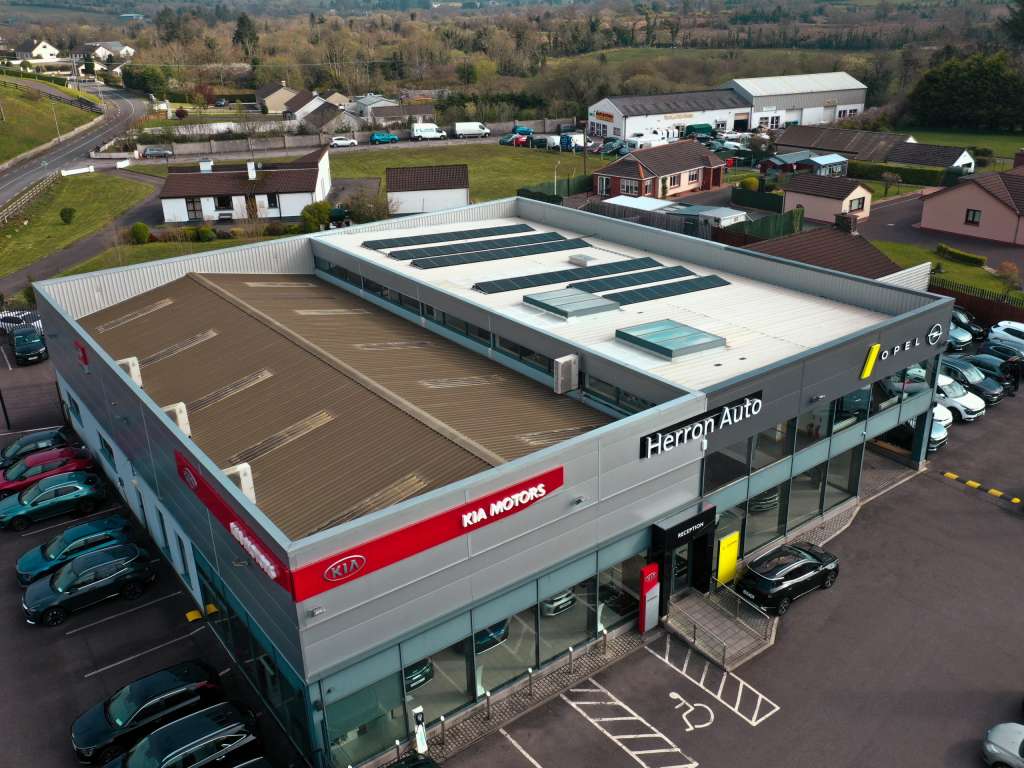
The NDMG supports systems up to 1,000 kWp. Most commercial rooftop installations for SMEs, schools and community buildings fall in the 10 kWp to 200 kWp range, where the grant substantially cuts the net investment required.
Eligibility Requirements in Full
Understanding the qualifying conditions before you apply avoids delays and gives your application the strongest possible foundation.
Building and System Requirements
The table below summarises the main eligibility criteria.
| Requirement | Detail |
|---|---|
| Building age | Built and occupied before 31 December 2020 |
| Primary purpose | System must target self-consumption, not export |
| Maximum system size | 1,000 kWp |
| Installer registration | Must use a SEAI-registered Non-Domestic Microgen installer |
| Timing | Letter of Offer must come before installation begins |
| Application window (enhanced rate) | 6 October 2026 to 6 July 2027 |
The requirement that installation cannot begin before the Letter of Offer arrives is one of the most common causes of grant disqualification. Proceeding with installation before SEAI issues written confirmation disqualifies your claim entirely. Solar Generation holds back every installation until the Letter of Offer is confirmed.
For a broader overview of every solar grant available in Ireland right now, see our solar grants Ireland 2026 guide.
A Note for Farmers and Agricultural Enterprises
Farmers receiving or applying for support under TAMS 3 (Targeted Agricultural Modernisation Scheme) cannot combine TAMS 3 with the NDMG on the same solar installation. The two grants cannot stack on a single system.
For agricultural enterprises considering systems above 200 kWp, the NDMG is generally the better financial route. A large agricultural shed, grain store or processing facility with significant electricity demand will typically see a higher net return from the NDMG’s higher grant ceiling than from TAMS 3. If you are unsure which route suits your farm, contact us and we will advise based on your specific setup.
Additional Financial Incentives Beyond the Grant
The NDMG grant cuts the upfront capital cost of a solar installation, but it is not the only financial support available to commercial organisations in Ireland.
How the Accelerated Capital Allowance Works
Revenue’s Accelerated Capital Allowances (ACA) scheme lets businesses subject to corporation tax or income tax write off 100% of qualifying energy-efficient equipment, including solar PV, in Year 1. Standard plant and machinery follows an eight-year write-down period, so the ACA delivers a meaningful cash-flow benefit in the year your installation completes.
For a business in the 25% corporation tax bracket with a 100 kWp system costing approximately €90,000 gross, the NDMG grant covers €40,000, leaving a net cost of around €50,000. The ACA then reduces tax liability by 25% of that net cost, saving a further €12,500 in the year of installation. The Revenue ACA guidance sets out the qualifying conditions in full.
Sole traders and partnerships taxed under income tax can also claim ACA, which extends the benefit well beyond limited companies.
What the Clean Export Guarantee Pays
Any surplus electricity your solar system generates above your own consumption goes to the national grid under the Clean Export Guarantee (CEG). Electricity suppliers pay for this exported power at rates ranging from approximately 15 cent to 32 cent per kWh across participating suppliers.
A well-sized solar system will export relatively little, since the objective is self-consumption. However, seasonal variation and quieter periods, particularly in schools and sports facilities, produce real export volumes. The Clean Export Guarantee ensures every unit of surplus generation earns a return.
Combined Financial Impact
Taking a 100 kWp commercial installation as an example: the NDMG grant at 45% covers approximately €45,000. The ACA then reduces the tax liability on the remaining net cost by up to 25%. Add ongoing electricity bill savings and Clean Export Guarantee payments, and most commercial solar systems installed before July 2027 reach payback within 3 to 5 years.
What Solar Generation Installs
Solar Generation is a SEAI-registered Non-Domestic Microgen installer based in Carraroe, Co. Sligo. We install Luxor glass-glass solar panels, rated for durability in the Atlantic coast climate of the west of Ireland, paired with SolaX inverters, among the most widely deployed commercial inverter brands in Ireland and Europe.
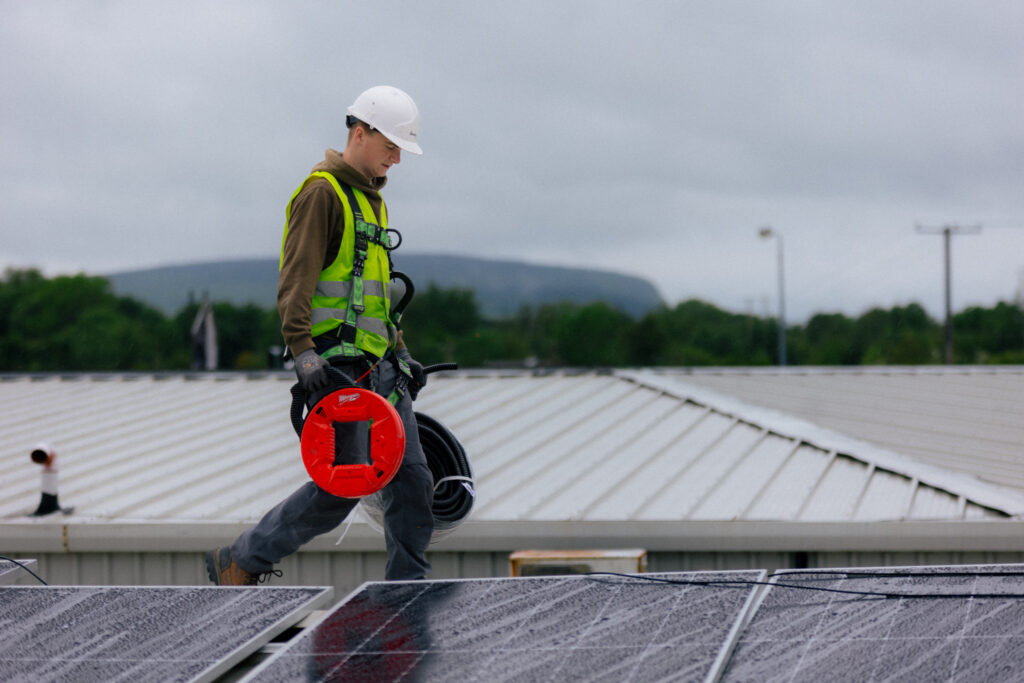
Glass-glass panel construction removes the PET backsheet found in standard panels, improving resistance to humidity, salt air and UV degradation across the 25 to 30-year life of a commercial installation. For businesses and community organisations in Sligo, Mayo, Roscommon, Leitrim and Donegal, where weather conditions are more demanding than the national average, this specification makes a practical difference.
We manage the full NDMG application for every client, from initial eligibility assessment through to submission and follow-up with SEAI. Installation begins only after the Letter of Offer arrives.
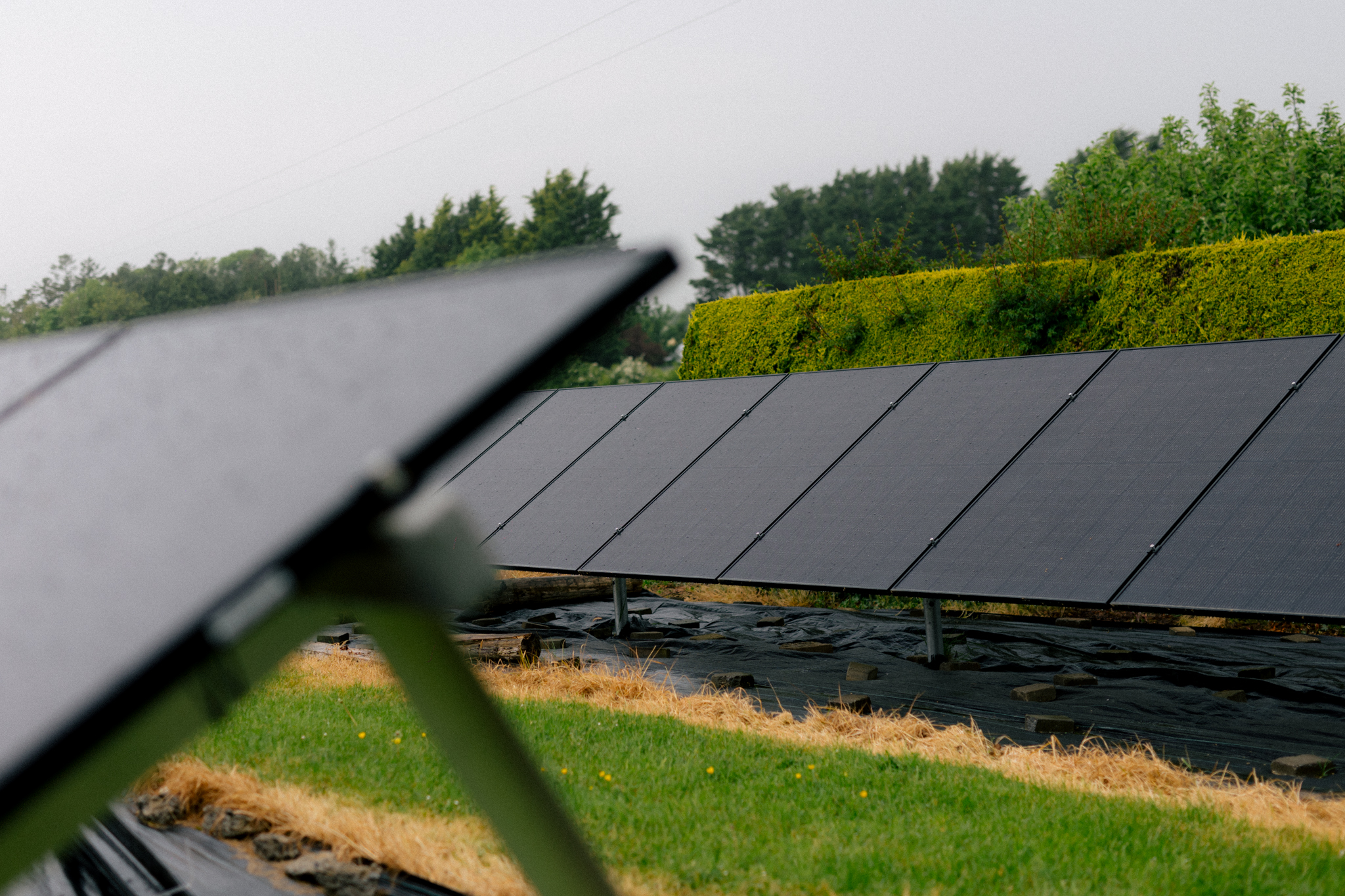
For ground-mounted systems, increasingly common for agricultural enterprises and businesses with available land, see our ground-mounted solar panels Ireland page.
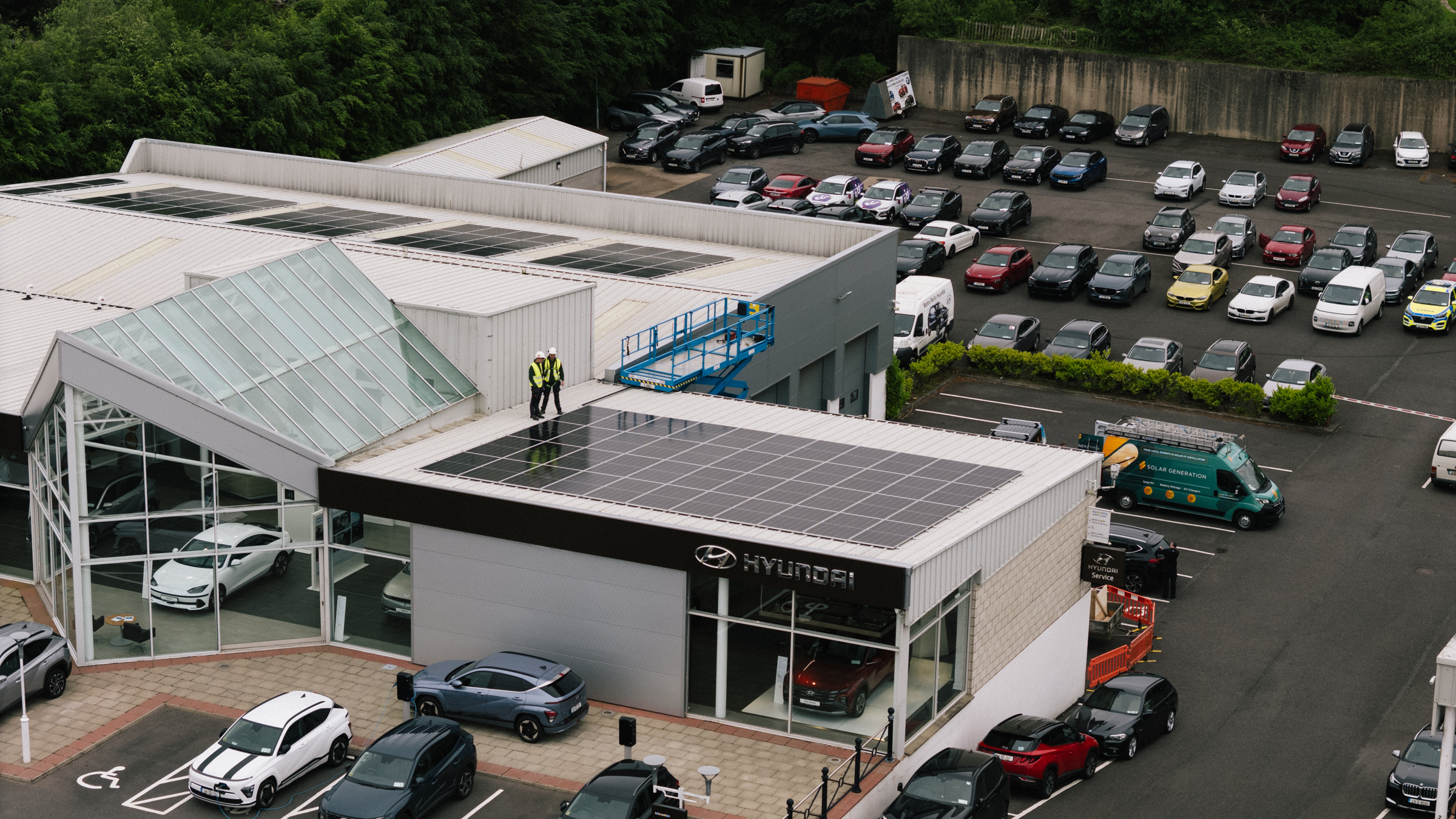
For an overview of our commercial installation work, visit our commercial solar page.
The Application Process Step by Step
- Contact Solar Generation for a site assessment and indicative system design.
- Receive a detailed quotation that separates eligible from ineligible costs for SEAI purposes.
- Solar Generation submits the NDMG application to SEAI on your behalf.
- SEAI reviews the application and issues a Letter of Offer, typically within a few weeks.
- Solar Generation schedules and completes the installation after the Letter of Offer arrives.
- Solar Generation submits the grant claim documentation to SEAI.
- SEAI processes the payment directly to the applicant.
Given the enhanced rate and the nine-month window, application volumes will run higher than normal from late 2026 into 2027. Starting the process early rather than waiting until mid-2027 is the practical approach. The application cut-off is 6 July 2027, but SEAI must also issue the Letter of Offer and installation must complete within defined timeframes, so leaving it late creates compressible risk.
Frequently Asked Questions
Can a sole trader apply for the NDMG commercial solar grant Ireland?
Yes. Sole traders qualify explicitly for the NDMG. The grant attaches to the commercial premises, not to the legal structure of the applicant. A sole trader running a business from qualifying premises applies in the same way as a limited company.
Does the building have to be in the applicant’s ownership?
Not necessarily. Tenants can apply in certain circumstances, but they need the landowner’s consent and a sufficient remaining lease term to satisfy SEAI’s requirements. Solar Generation clarifies this during the initial site assessment.
Can a school or sports club apply?
Yes. Schools, colleges, sports clubs, community centres and registered charities all qualify. Public bodies and local authorities qualify too. The NDMG covers a broad range of non-domestic organisations.
What happens if I miss the 6 July 2027 deadline?
Applications after 6 July 2027 go through at the standard grant rate of approximately 23% of eligible costs. The enhanced 45% rate covers only applications during the nine-month window. No provision exists to apply the enhanced rate retrospectively to later applications.
What is the minimum and maximum system size?
The NDMG sets no minimum system size, though SEAI assesses whether the system size is appropriate for self-consumption at the premises. The maximum eligible system size is 1,000 kWp.
Can I claim both the NDMG and the Accelerated Capital Allowance?
Yes. The NDMG and ACA are separate mechanisms. You claim the ACA on your net investment after the grant, not the gross cost. Further detail is available via Citizens Information.
How long does the full process take from first contact to installation?
A typical commercial installation, including SEAI application and approval, runs between two and five months depending on system complexity and SEAI processing times. Larger systems or those needing grid connection upgrades take longer. Starting the process as early as possible within the application window gives you the most headroom.
Get a Quote for Your Commercial Solar Installation
The enhanced 45% commercial solar grant Ireland is a time-limited opportunity. Applications close on 6 July 2027, and strong interest across the commercial, agricultural and community sectors means the process rewards early movers.
Solar Generation serves businesses, farms, schools, sports clubs and community organisations across Co. Sligo, Mayo, Roscommon, Leitrim and Donegal. We hold full SEAI registration under the Non-Domestic Microgen Grant scheme and manage the complete application process from start to payment.
To find out whether your premises qualifies, what system size suits your consumption, and what the net cost looks like after grant and tax reliefs, contact Solar Generation for a no-obligation site assessment.
Sources
- SEAI Non-Domestic Microgen Grant: https://www.seai.ie/grants/business-grants/commercial-solar-pv
- Revenue Accelerated Capital Allowances: https://www.revenue.ie/en/companies-and-charities/reliefs-and-exemptions/energy-efficient-equipment/index.aspx
- Citizens Information, solar panel grants: https://www.citizensinformation.ie/en/housing/housing-grants-and-schemes/grants-for-home-renovations-and-improvements/grants-for-solar-panels/