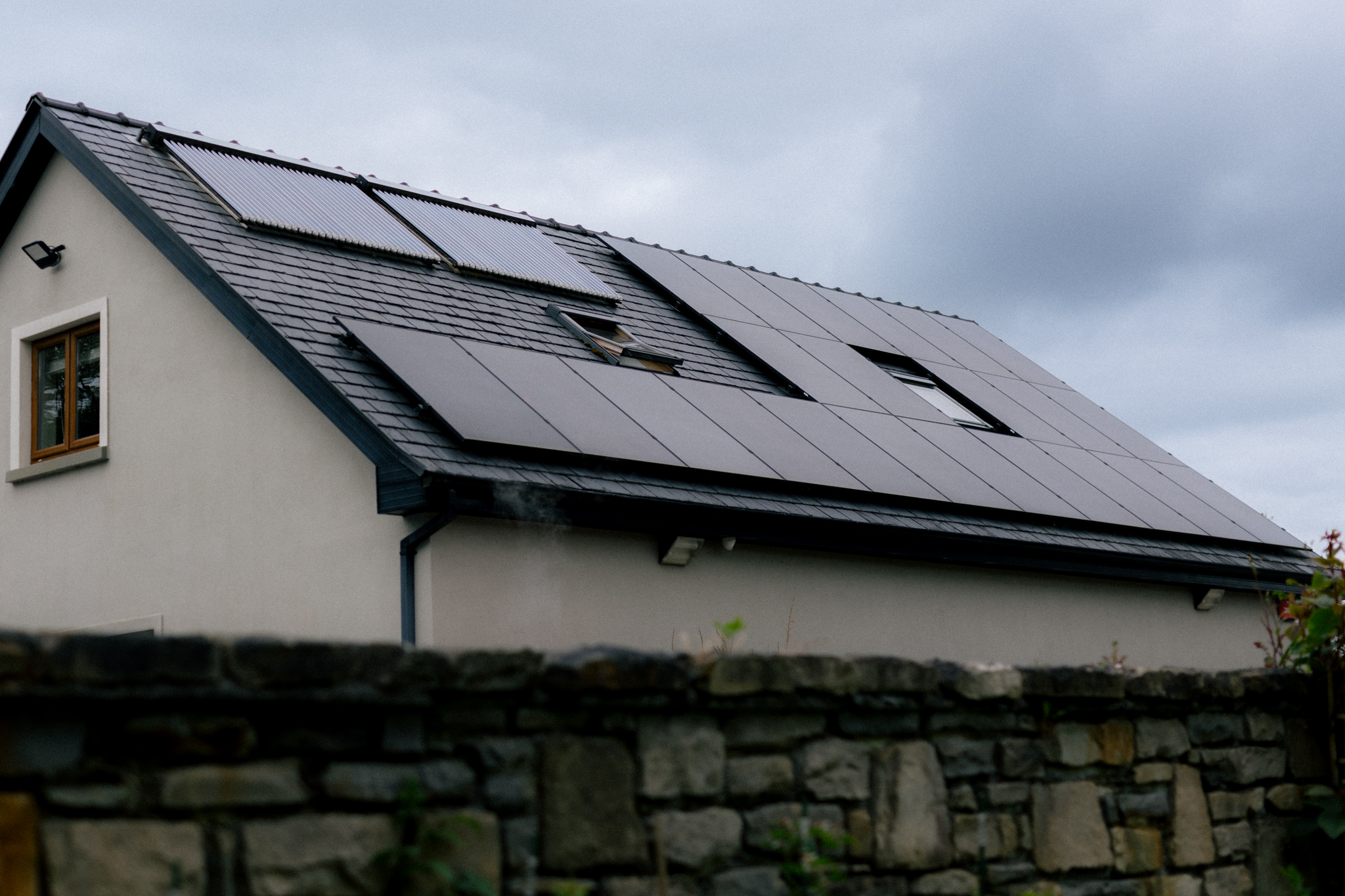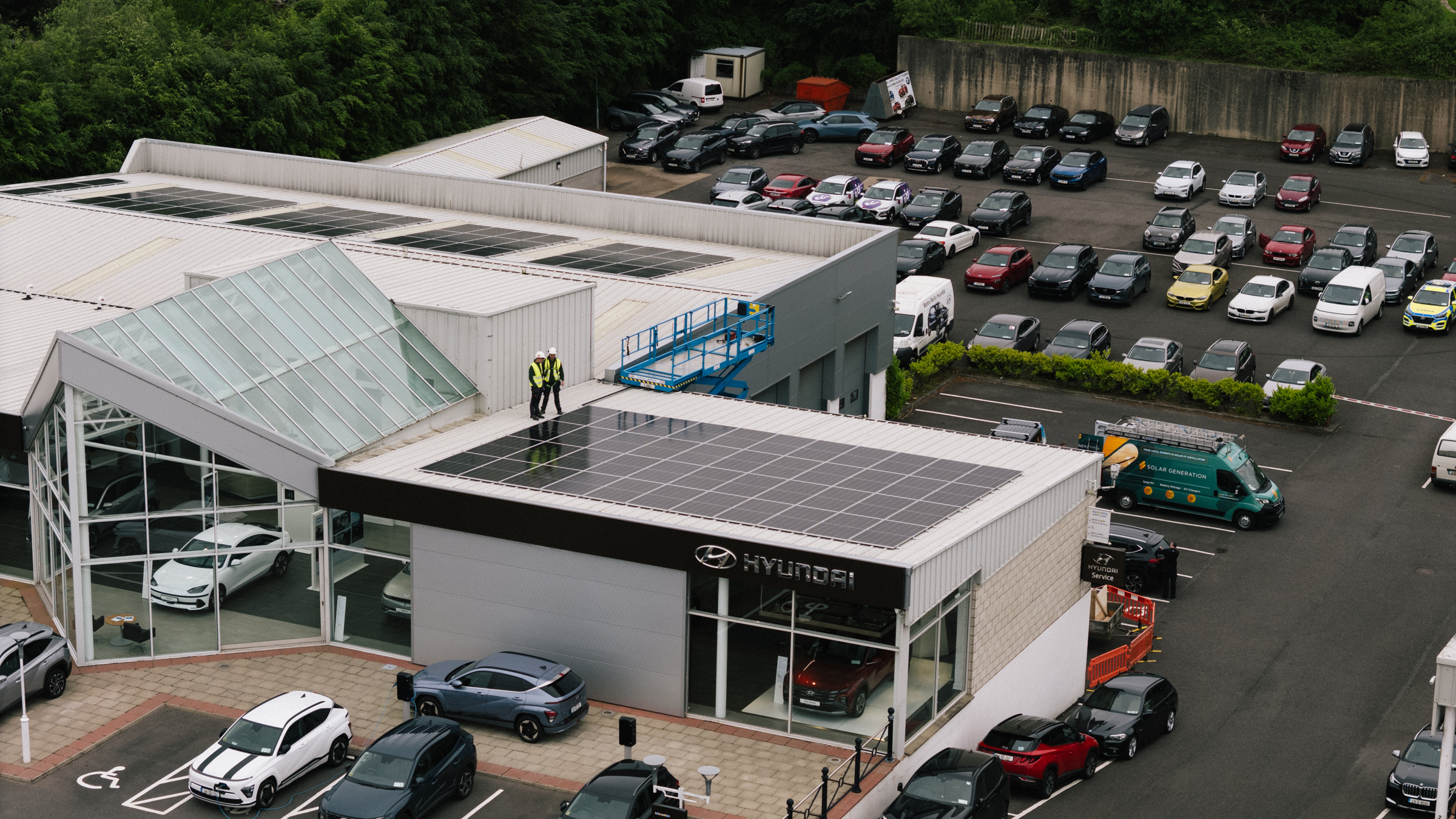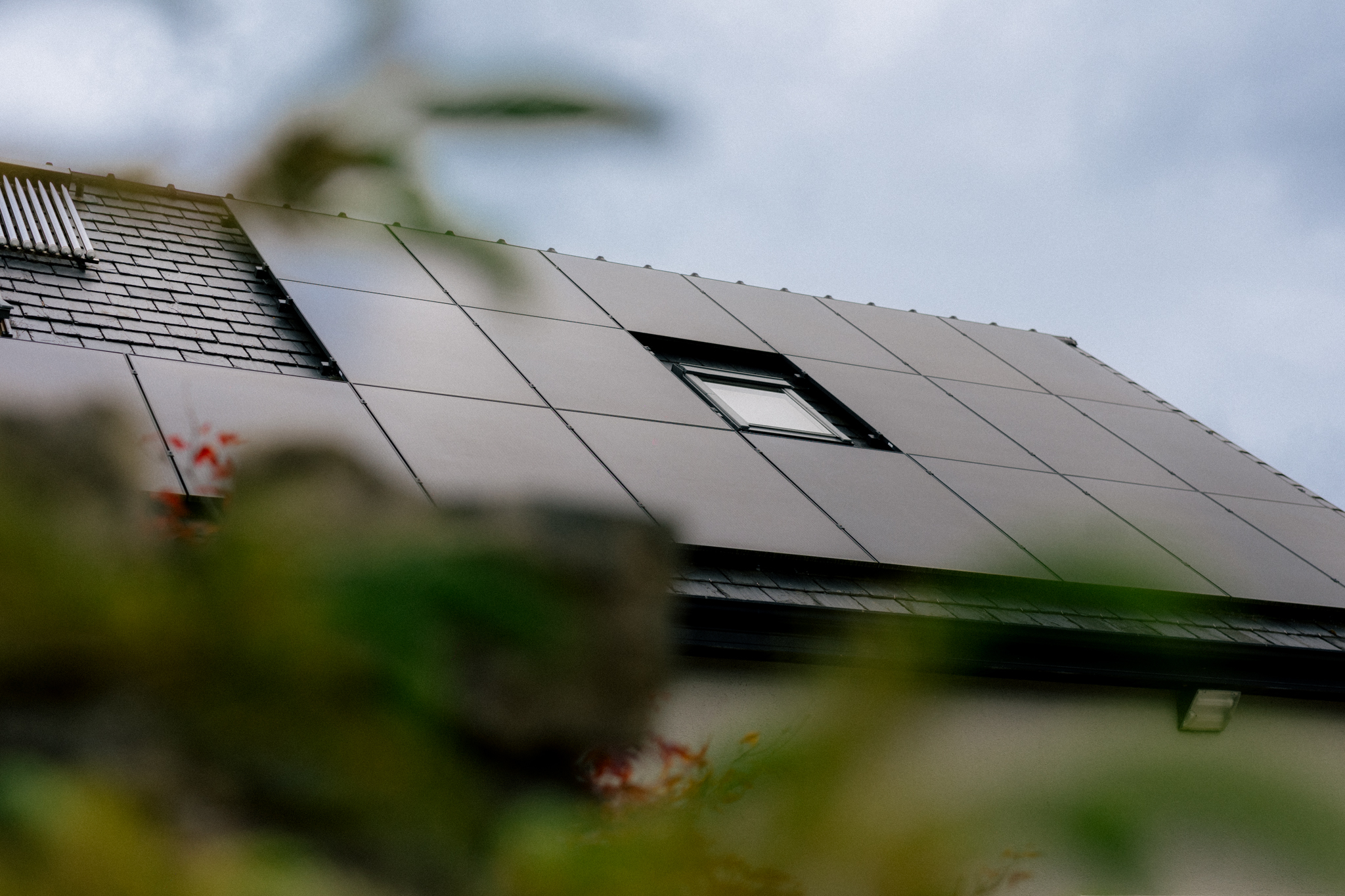
A standard residential solar panel in Ireland measures roughly 1.7m by 1.1m, weighs 21 to 24kg, and produces between 400 and 500 watts of electric power. Most homes need somewhere between 8 and 14 panels. The number you actually need depends less on the panel itself and more on where your roof sits, because a home in Sligo or Donegal generates differently to one in Dublin. That last point is the one most guides to solar panel sizes leave out, and it changes the answer.
What “Size” Actually Means With Solar Panels
There are two sizes hiding inside one word, and confusing them is the most common mistake people make when they start getting quotes.
heavy, and the first is the physical size of the panel. How long, how wide, how heavy, and how much of your roof it covers.
The second is the power rating, measured in watts. A 450W panel and a 400W panel can be almost identical in physical dimensions, yet one produces more electricity from the same footprint. When an installer talks about a “bigger” solar PV system, they almost always mean more watts, not more square metres.
This matters because the two pull in different directions on an Irish roof. Roof space is often the real limit, not budget. Getting more watts out of every panel is how you make a smaller, more typical Irish roof do the work of a larger one. Understanding solar panel size, then, starts with separating the dimension of the panel from the wattage it delivers.

Physical Dimensions: How Big Is a Solar Panel?
deep, 1,762 mm The solar panels going onto homes across the North-West in 2026 cluster around a familiar footprint. A typical 400W to 470W residential panel measures about 1,722 to 1,762 mm long by 1,134 mm wide and sits roughly 30 to 35 mm deep, including the frame. That works out at just under 2 square metres per panel.
Higher-output panels, the 490W and above range, run slightly larger, closer to 2,094mm by 1,134mm. They give you more power per panel, but they take a bigger bite out of your roof and weigh a little more.
Here is the rough picture by output, a simple solar panel size chart to work from:
| Panel output | Approx. dimensions | Area covered | Typical weight |
|---|---|---|---|
| 400W | 1,722 x 1,134mm | ~1.95 m² | 21–22 kg |
| 450W | 1,762 x 1,134mm | ~2.0 m² | 23–24 kg |
| 500W+ | 2,094 x 1,134mm | ~2.4 m² | 25–28 kg |
Those numbers are a guide, not a spec sheet. Solar panel manufacturers vary by a few centimetres, and the exact dimensions shift as the technology improves. The point to take from the table is the relationship: more watts usually means a slightly larger, slightly heavier panel, but the gain in output outpaces the gain in size.
clouds. You will also see panels described by their cell count. A 60-cell solar panel is the older residential standard, while 72-cell solar panels are physically taller and tend to carry higher wattage. Most of what goes on in Irish homes now uses a half-cut cell layout that improves performance in partial shade, which is a useful trait under northwest clouds.
Wattage: Why the Watt Number Matters More Than the Measurements
The wattage is the number worth understanding, because it decides how many panels you need.
A 500W panel produces 25% more electricity than a 400W panel. So to build the same system size, you need fewer of them. A 4kW solar panel system is ten 400W panels, or eight 500W panels. The energy you end up with is identical. What changes is how many panels sit on your roof, how much space they take, and how long the install takes.
In 2026 the Irish market has settled on around 450W to 470W panels using TOPCon and N-type technology. These hit solar panel efficiency in the 22 to 23% range at a sensible price, which is why most reputable installers default to them. The older 380W to 410W panels still get installed, usually where an installer buys in bulk at that size, and they are perfectly good. They just need a touch more roof space to reach the same total.
Use because most of these are monocrystalline silicon panels, the ones with the uniform black cells. They have pushed out the older blue-tinged polycrystalline silicon panels for home use because monocrystalline gives more output per square metre, and on a tight Irish roof that is the whole game. Thin-film solar cell technology exists too. It is rare on Irish homes, though, because it needs far more area for the same power and suits sprawling commercial sites better.
So is a higher-wattage panel better? Not automatically. A 500W panel is the right call when roof space is tight and every square metre has to earn its keep. If you have a large, clear, south-facing roof, a slightly lower-wattage panel can be the more economical choice on price. The wattage on its own tells you very little. The fit between the panel and your specific roof tells you everything, which is why choosing the right solar panel size is a question about your home, not about the spec sheet.
How Many Solar Panels Do You Actually Need?
This is the question behind the search, and the honest answer is that it depends on three things: how much electricity you use, how much usable roof you have, and where in the country that roof sits.
As a starting point, a typical three-bedroom Irish home is well served by 8 to 12 panels, which is roughly a 4 to 5kW system. That generates enough to cover most of a household’s daytime electricity use across the year. A larger four or five-bedroom detached home, or one with an EV and a heat pump, often pushes the number of panels toward 14 or more.
A rough rule of thumb for system size against panel count:
| System size | 400W panels | 500W panels | Suits |
|---|---|---|---|
| 3 kW | 8 panels | 6 panels | Smaller homes, lower usage |
| 4 kW | 10 panels | 8 panels | Typical 3-bed home |
| 5 kW | 13 panels | 10 panels | Larger homes, EV charging |
| 6 kW+ | 15+ panels | 12+ panels | High-usage or detached homes |
These are planning figures. The real number of solar panels comes out of a site survey, where an installer measures your roof, checks your actual consumption in kilowatt-hours, and factors in orientation and shading. Anyone giving you a panel count without seeing your roof is guessing.
Roof Space: Will They Actually Fit?
The working figure is straightforward. You need roughly 8 to 10 square metres of usable roof per kilowatt of solar. A 4kW system therefore wants somewhere around 30 to 40 square metres of space to play with.
The word doing the heavy lifting there is “usable”. A roof is rarely a clean rectangle. Velux windows, chimney stacks, vents, satellite dishes and shaded areas all carve into the space, and panels need a clear margin from the edges. The total area of your roof and the area you can actually cover are two different numbers, and the gap between them surprises people.
Doing so, pitching; pitch and orientation come into it too. Most Irish homes sit at a 30 to 45 degree roof pitch, which is close to ideal for a photovoltaic system. South-facing gives the best output, though south-east and south-west perform strongly. Even east- and west-facing roofs are worth doing; they just produce a little less across the day.
The Part Most Guides Get Wrong: The North-West Generates Differently
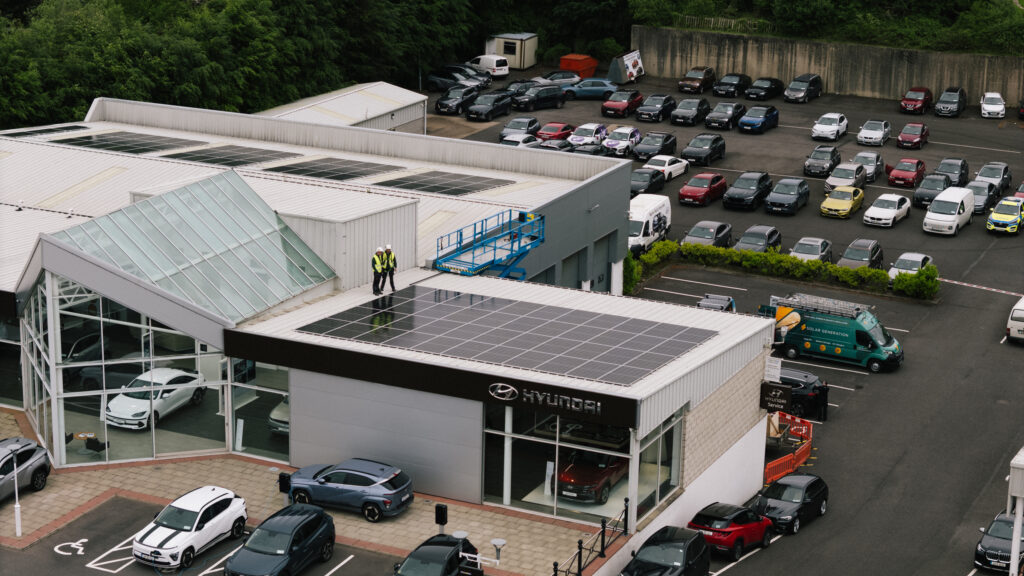
Almost every solar panel size guide quietly misleads people in this part of the country, and it does it the same way every time.
Maths are most guides, and most national installers, based on Dublin. Dublin gets around 1,300 hours of sun a year, and the standard figures you see online, the panel counts, the generation estimates, and the payback maths are usually built on east coast conditions.
The Northwest is a different climate. Sligo, Mayo, Donegal, Leitrim and Roscommon sit on the Atlantic edge, with more cloud cover, more rain and stronger weather coming in off the sea. A well-installed system here typically generates in the region of 850 to 950 kWh per kWp installed, which can sit below the figures quoted for the east and south.
What does that mean in practice? It means the right system for a North-West home is often sized a little differently to the national average. A panel count that fully covers a Dublin home’s usage might leave a Donegal home slightly short across the dimmer months. It also means panel choice matters more here, because squeezing maximum output from each panel helps offset the weaker light. Higher-efficiency panels earn their place faster on this coast than they do on the east.
There is a flip side worth knowing. Solar panels run on daylight, not heat, and they actually work more efficiently in cooler temperatures. The North-West’s mild, overcast weather is not the obstacle people assume. Frequent rain even keeps the glass clean, which sustains output. The systems work well here. They just need to be sized by someone who knows the local generation reality rather than copying a Dublin spec sheet.
Panel Weight and Older Roofs
Weight rarely stops a solar install, but it is worth a sentence for the many older bungalows, farmhouses and period homes across the region.
A ten-panel system adds somewhere around 210 to 280kg to your roof, spread across a mounting structure that distributes the load rather than concentrating it. Solar panel weight is rarely a problem on its own, because modern roofs handle this comfortably. Older or unusual roof structures simply warrant a closer look during the survey, which a competent installer will do as standard. Exposure matters here too. Roofs that take the full force of Atlantic wind need mounting designed for that load, which is exactly the kind of local detail a national installer working off a template can miss.
Sizing for Farms and Commercial Roofs
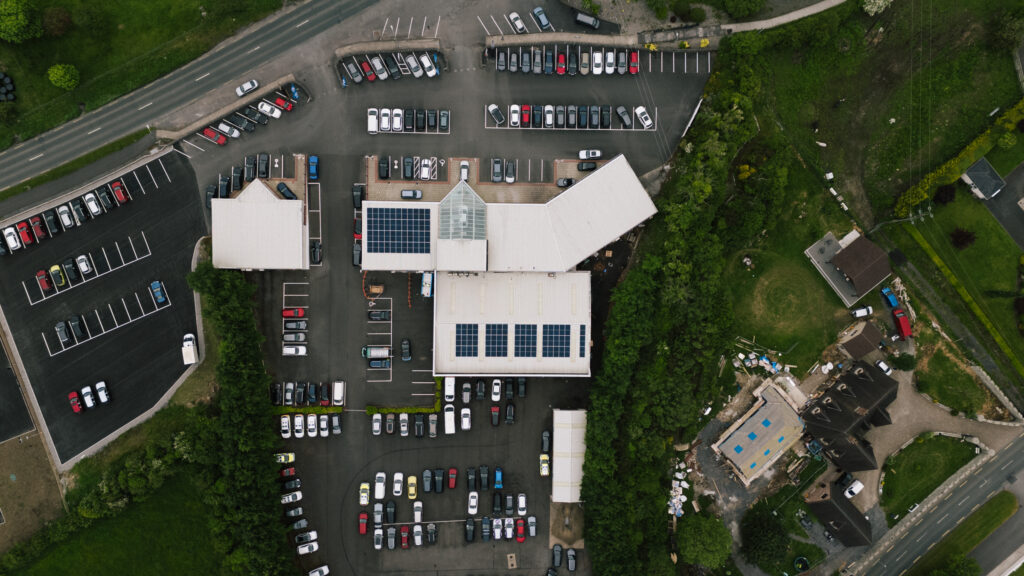
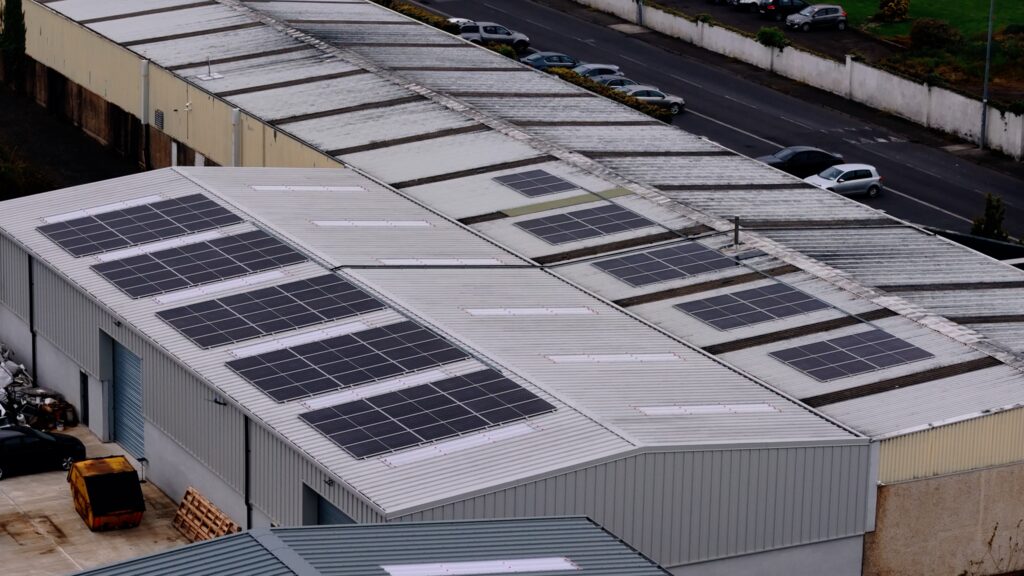
Larger roofs change the conversation entirely. Farm sheds, commercial units and agricultural buildings often have wide, unobstructed roof space and a much higher daytime electricity demand, which is close to the ideal scenario for solar.
On these roofs, higher-wattage panels and larger commercial solar systems make obvious sense, and the sizing is driven by consumption and available grant support rather than by squeezing panels around chimneys. Commercial panels also tend to run larger than residential ones, because handling and roof-edge margins matter less on a big industrial roof. If you are sizing commercial solar for a farm or business, the maths is different enough that it deserves its own conversation.
So What Size Do You Need?
If you take one thing from all of this: the panel size is the easy part. A standard Irish solar panel is about 1.7m by 1.1m, around 450W, and weighs a little over 20kg. The harder and more important question is how many of them your home needs, and that comes down to your usage, your roof, and the fact that your roof is in the northwest rather than on the east coast.
The figures in this guide will get you to a confident estimate. The exact number, the one you build a quote around, comes from someone standing on your roof with a tape measure and your last twelve months of electricity bills in hand.
If you have a sense of your roof and your usage and want that exact number, a free site assessment will give it to you, sized for where you actually live rather than a national average.