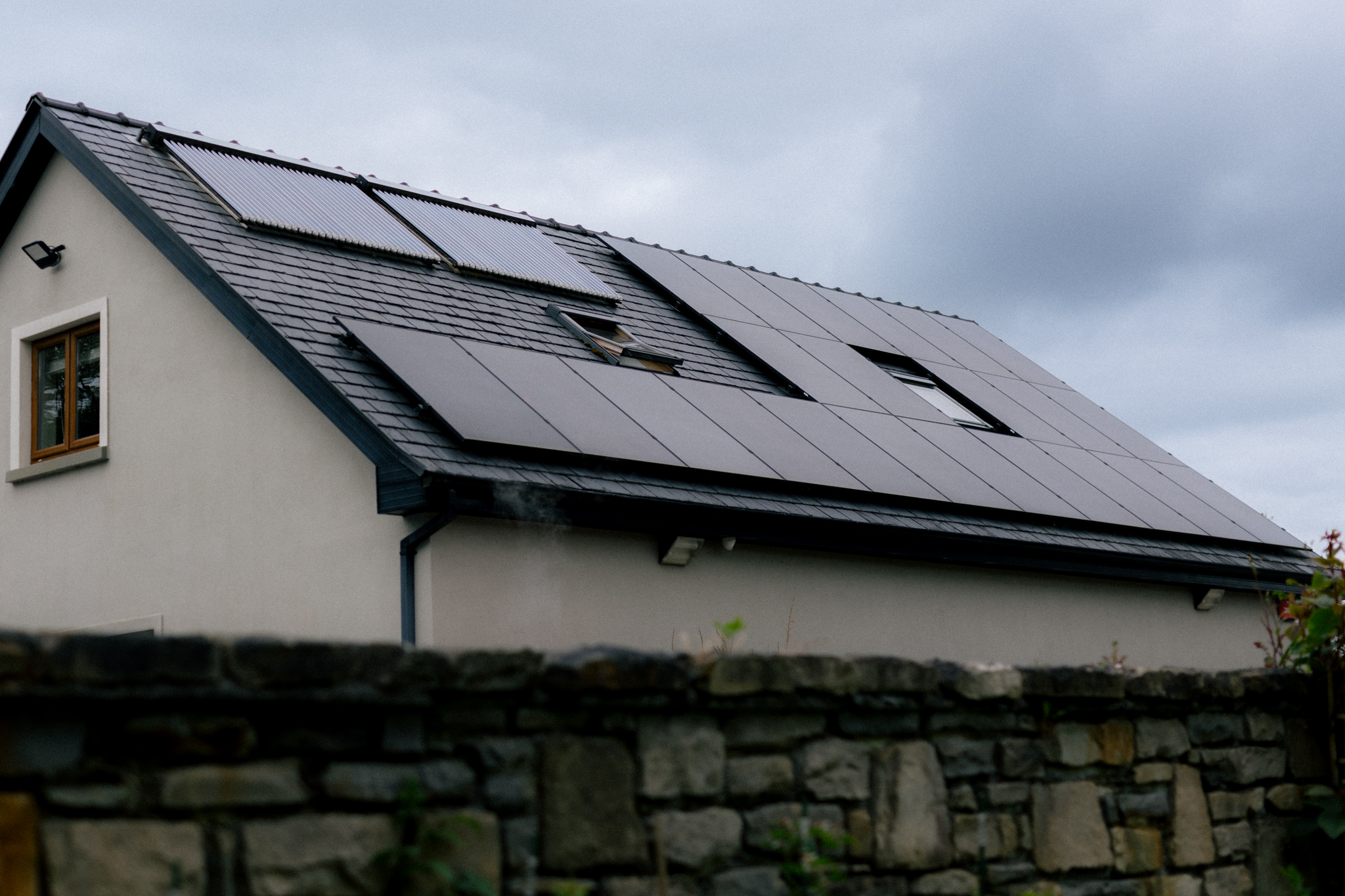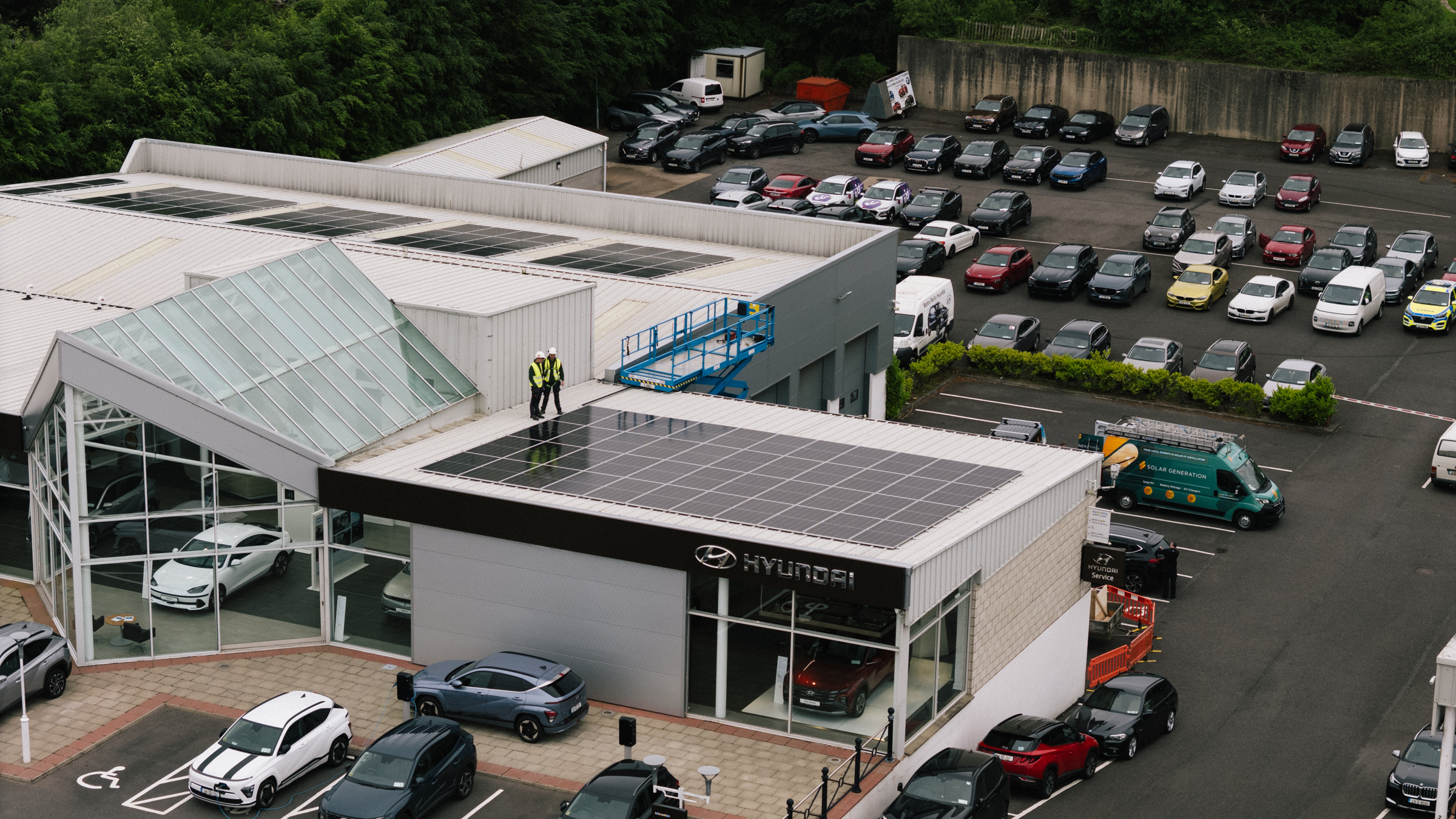
Installing solar panels has minimal impact on your home insurance in Ireland. Most major insurers, including Allianz, AXA, Aviva, and Liberty Insurance, cover professionally installed rooftop solar panels as part of standard buildings insurance, with little or no premium increase. What you must do is notify your insurer before or immediately after installation. Failing to do that is what causes problems. Not the panels themselves.
We install solar systems across the North-West of Ireland. We don’t sell home insurance. But over the course of hundreds of installations, we’ve seen exactly what happens when homeowners handle this well and what happens when they don’t. This article is based on that experience, not on policy documents but on real conversations with real homeowners who’ve been through the process.
Most people going through the installation process are thinking about grants, electricity bills, and getting the work done. Insurance feels like an afterthought. In our experience, it matters more than most people realise.
Adding solar panels to your home changes the structure of the property in a way your insurer needs to know about. Whether that changes your premium, your cover, or nothing at all depends on your policy and your provider. What doesn’t change is your obligation to disclose it.
If you’ve already had your system installed and haven’t updated your policy yet, don’t panic. You’re not alone, and it’s straightforward to fix. Everything below applies equally to you.
Does Installing Solar Panels Affect Your Home Insurance?
In most cases, yes. Though not in the way people fear.
Solar panels are treated as a permanent home improvement in the same category as an extension or a structural upgrade. They increase the rebuild value of your property, and that figure is what your buildings insurance is based on. If you add a system worth €8,000 to €15,000 to your home and don’t update your policy, you may find yourself underinsured if you ever need to make a claim. In practice, that means being told the policy covers your roof but not what’s mounted on it. The gap comes out of your pocket.
The key number to think about is your rebuild cost, not the market value of your home. The rebuild cost is what it would cost to reconstruct the property from scratch, including all fixtures and fittings. Your solar system is now part of that figure.
Here’s something that doesn’t get talked about enough: for many homeowners, the system cost fits comfortably within the existing coverage headroom. If your home is insured to rebuild at €300,000 and your current rebuild estimate is €250,000, adding a €12,000 system still keeps you under your insured limit. Some insurers won’t increase your premium at all in that scenario. The conversation with your insurer is worth having before installation rather than after, precisely because the answer is often better than people expect.
Do You Need to Tell Your Insurer Before Installation?
Yes. Before the work begins, or at minimum on the day of completion.
Some policies include a general clause covering home improvements up to a certain value without requiring prior notification. Others require proactive disclosure for any structural or significant alteration. Reading your policy documents is the only way to know which applies to you. If you’re unsure, a five-minute call to your insurer before installation is worth far more than the administrative headache of a disputed claim down the line.
One thing most homeowners don’t think about: renewal. Notifying your insurer once at installation is the right first step, but it’s worth confirming coverage again at your next annual renewal, particularly if your system includes battery storage or if the replacement value of equipment has changed.
Will Your Premium Go Up?
This is the question everyone wants answered, and the honest answer is it depends on your insurer and your specific situation. For most homeowners, the impact is modest.
Allianz does not increase premiums for standard professionally installed residential solar systems. AXA and Aviva treat rooftop panels as permanent fixtures similar to a conservatory or extension, and several major Irish insurers have quoted the same annual premium for homes with panels as for equivalent homes without.
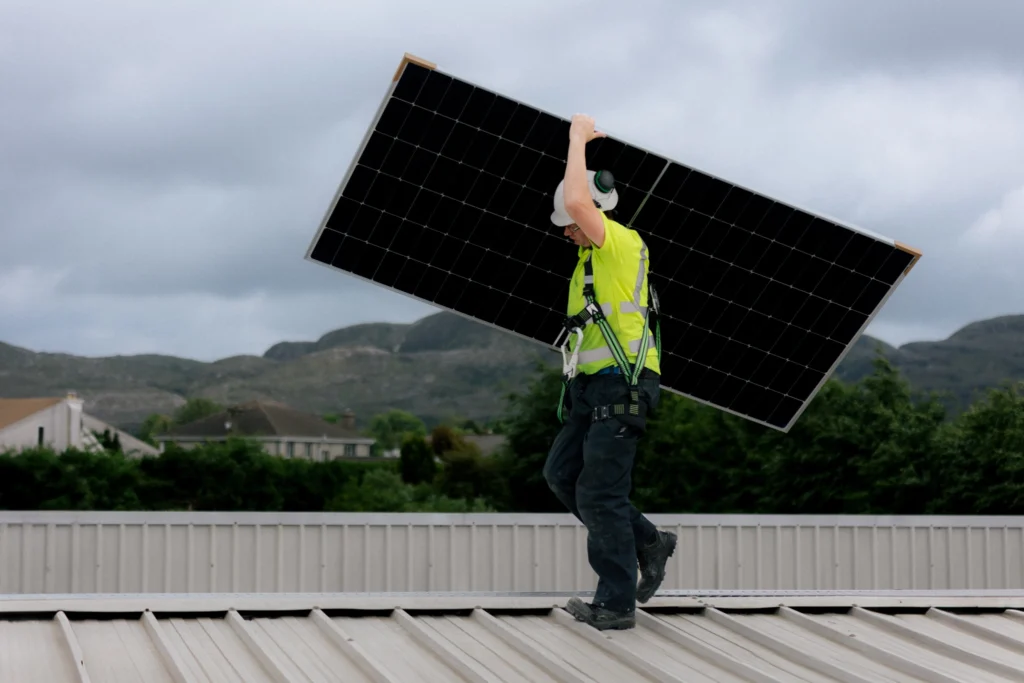
The two factors that most commonly drive a premium increase are worth understanding clearly.
The first is whether your system value exceeds your current coverage headroom. If your rebuild cost was already sitting close to your insured limit before installation, adding the system value pushes you into a higher coverage bracket, and your premium adjusts accordingly. This isn’t specific to solar. It applies to any home improvement that increases rebuild value.
The second applies specifically to systems mounted on secondary structures. A detached garage, an agricultural outbuilding, or a shed. Most home insurance policies cover secondary structures at only a fraction of the main dwelling’s value, typically around ten per cent. A system installed on a detached garage on a property insured at €300,000 would have secondary structure cover of roughly €30,000, which may not be enough to cover a larger system. If you’re considering a ground mount or an outbuilding installation rather than a rooftop installation on the main house, this is a specific question to raise with your insurer before the work is priced. You don’t want to discover on the day of a claim that the policy treats a €14,000 system in your detached garage the same way it treats a garden shed.
It’s also worth knowing that insurers vary more than people expect on this. Some handle solar installations routinely and update your policy in a single call. Others are slower to adapt, and if your current provider proves unnecessarily difficult, shopping around is always a legitimate option. Solar installations are common enough now that most major Irish insurers have a straightforward process for them.
Always confirm current terms directly with your provider before installation, as policy details change.
What you should avoid in any case is not telling your insurer, assuming nothing has changed, and then discovering at claim time that your policy doesn’t cover the full cost of replacing a damaged system. The difference between a small premium adjustment and a significant uncovered loss is one conversation.
The Exact Information Your Insurer Will Ask For
When you call to update your policy, have the following ready. Your insurer will typically want to know the system size in kilowatts peak; the total installation cost, including panels, inverter, mounting hardware, and battery storage if applicable; the installation date; and confirmation that the installer is SEAI-registered and Safe Electric certified.
Beyond the policy update itself, keep the following documentation permanently. Your installer’s completion certificate. The electrical safety certificate, which is the ESB Networks NC6 form, is the electrical completion document issued by your Safe Electric registered installer on the day the system is connected. Panel and inverter warranty documents. Proof of SEAI registration.
These are what an insurer will ask for at claim time. A professional installer provides all of this as standard on completion. If yours didn’t, follow up and request the full documentation pack before you file anything away. The paperwork feels like admin until the night a storm puts a branch through your panels and your insurer asks for the installation certificate. At that point, it’s the only thing standing between a paid claim and an argument.
Are Solar Panels Covered Under Home Insurance?

Most standard Irish home insurance policies cover solar panels as part of the building structure, treated the same as your roof or any other permanent fixture. Where policies diverge is on accidental damage and equipment breakdown. Not every policy covers these as standard, and that’s the gap that catches people out.
Ask your insurer directly: are the panels covered as part of the building structure? What is covered in the event of storm damage, impact damage, or electrical fault? Is there a single-item limit that might cap the claim value below the replacement cost of the system? Does the policy cover loss of income or feed-in tariff revenue if the system is offline after a claim?
That last question is relevant for homeowners who have registered with a microgeneration supplier and are receiving payments for electricity exported to the grid. If the system is damaged and offline for two months, knowing whether that income loss is recoverable is worth asking before it happens.
What About Storm Damage?
Most home insurance policies cover storm damage as standard, and panels installed by a registered professional using industry-standard roof mounting systems qualify for the same protection as the roof itself.
The critical variable is installation quality. Panels correctly fitted and certified by a Safe Electric registered electrician present no unusual risk profile to an insurer. Panels installed by an unregistered contractor, or as a DIY project, are a different situation entirely. Many insurers will not cover them, and some will decline to renew a policy on a property where they discover uncertified electrical work.
This is one of the less-obvious reasons why choosing an SEAI-registered installer matters beyond the grant application. The documentation that comes with a professional installation is what validates your insurance cover, not just your compliance with grant conditions.
If You’ve Added Battery Storage, Mention This Separately
Battery storage introduces a separate set of questions for insurers that rooftop panels alone don’t trigger. Battery units are roughly the size of a large fuse box and are typically wall-mounted in a garage, utility room, or attic space. Where the unit is located affects how it’s classified under your policy. Some insurers cover it under buildings, others under contents, and a small number require it as a separate line item.
Insurers will also ask about battery chemistry and fire safety certification. Modern lithium battery systems are designed with multiple safety protections. Insurers still assess them differently to panels, because of the thermal risk profile of lithium cells. Your installer should be able to provide the relevant technical documentation and safety certifications. Have these ready when you call.
A Note for North-West Homeowners
If you’re based in Sligo, Mayo, Donegal, Leitrim, or anywhere along the Atlantic coast, there are a few things worth raising specifically with your insurer.
Properties in the North-West face more severe weather exposure than the Irish national average. Higher sustained wind speeds, driving westerly rain, and, in coastal areas, salt-laden air that can affect roof fixtures over time. Storm damage is covered under most standard building policies, but it’s worth confirming your policy doesn’t carry exclusions for wind-exposed or coastal locations and that your mounting system is documented as having been installed to the relevant wind-load standards.
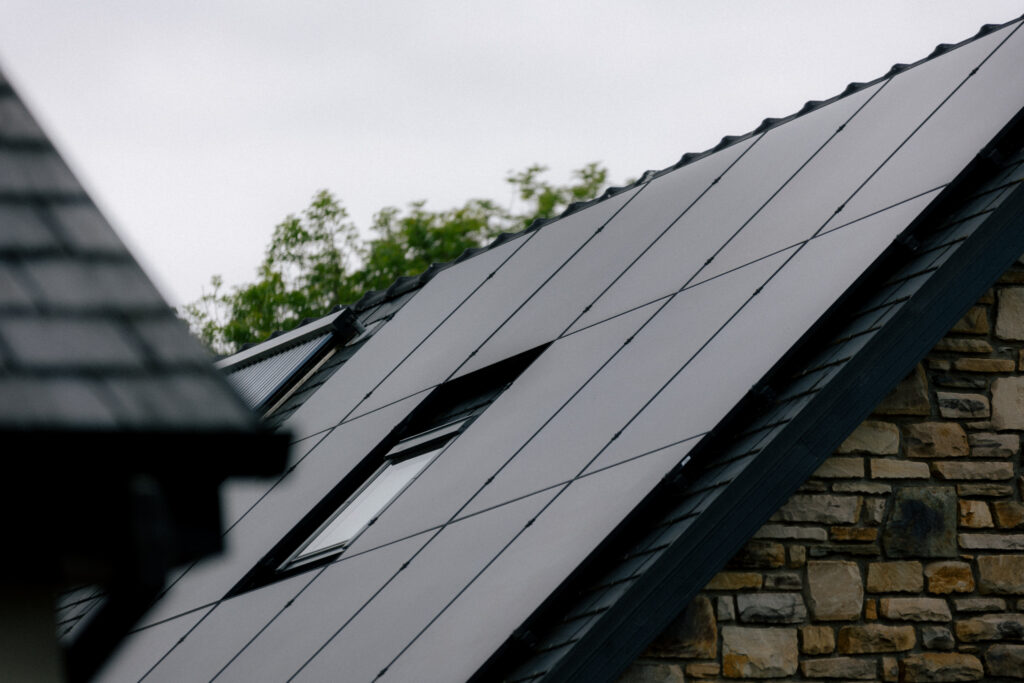
Older roof types are also common across this part of the country. Many homes in Connacht and Donegal have older slated or natural tile roofs, and some insurers will ask about roof condition and age as part of assessing a claim on a solar system. A professional installation includes a roof suitability assessment before any panels are fitted. That assessment becomes part of your installation record and part of your claim documentation if you ever need it. It’s another reason local knowledge matters when choosing an installer, not just price.
Before You File Your Policy Away: The Checklist
Before or immediately after your solar system is installed, work through the following. This is the same list we walk every customer through before their system goes in.
Contact your home insurer before work begins or immediately on completion. Not weeks later.
Provide the full system value, including panels, inverter, mounting hardware, and battery storage if applicable.
Confirm buildings cover by asking specifically whether the panels are covered as part of the building structure or whether a separate add-on is required.
Flag secondary structures and if any part of the system is installed on a detached garage or outbuilding, confirm the secondary structure coverage limit and whether it’s sufficient.
Update your rebuild cost to make sure your sum insured reflects the full replacement value of your home, including the new system.
Ask about storm, accidental damage, and electrical fault cover, as these are the three most common claim scenarios, and not every policy covers all three as standard.
Keep your documentation permanently, including your SEAI registration certificate, completion cert, NC6 electrical safety cert, and panel and inverter warranties. Your installer provides all of these on handover.
Check at renewal and confirm your solar system is still correctly listed on your policy each year.
None of this is complicated. It takes an hour at most. And it means that if something does go wrong, you’re not starting that conversation with your insurer from a difficult position.
What We Cover in Every Pre-Installation Conversation
By the time we finish a pre-installation consultation, most homeowners have a clear picture of their system options, their SEAI grant entitlement, and exactly what to say to their insurer. That conversation is free; it takes around thirty minutes, and it removes the guesswork from what is typically an €8,000 to €15,000 home investment. If you’ve already installed and haven’t updated your policy, we can walk you through that too.
If you’re at the stage where a real conversation makes sense, covering costs, grant eligibility, what the installation involves, and what to have ready for your insurer, we can cover all of it in one call. No jargon, no pressure, just a straight answer.
Book your free consultation and leave knowing exactly where you stand.