The Microgeneration Support Scheme (MSS) allows Irish homeowners with solar panels to sell surplus electricity back to the national grid. The payment for that exported electricity is called the Clean Export Guarantee (CEG). Your electricity supplier pays you per kWh exported, and the first €400 of annual export income is tax-free.
No separate MSS application is needed. Your installer handles the export grid connection and grid registration via an NC6 form.
If you have been looking at solar panels and wondering whether you can actually get paid for the electricity your roof produces, the answer is yes.
The scheme has been running since February 2022, and over 66,000 SEAI-funded solar installations have been completed in Ireland since it launched. The question most homeowners miss is not whether they can get paid but how much and what they need to do to make sure the money actually starts arriving.
The MSS and the SEAI Solar Grant Are Not the Same Thing
A lot of people confuse these two, and the confusion is understandable.
They both involve solar panels and government money. Beyond that, they are completely different things.
The SEAI Solar PV Grant is money you receive upfront, before the work starts, to help cover the cost of installing solar PV. You apply through the Sustainable Energy Authority of Ireland, get approval, then commission the work. That grant reduces what you pay out of pocket for the system itself.
The Microgeneration Support Scheme is not a grant. It is an ongoing payment scheme that kicks in after your system is installed and connected to the grid. Under the MSS, your electricity supplier is legally required to pay you for every unit of excess electricity you export. That microgeneration payment continues for as long as your panels are generating more power than your home is using at that moment.
You can use both. Most homeowners who install solar PV in Ireland today receive the SEAI grant to reduce upfront costs and then earn ongoing export payments under the MSS. The two schemes work together, not against each other.
What Is the Clean Export Guarantee and How Does It Work?
The Clean Export Guarantee is the specific payment mechanism within the MSS. Think of it as a feed-in tariff.
When your solar photovoltaic panels produce more electricity than your home needs right now, that surplus flows out onto the national grid. Your supplier measures that outflow via your smart meter and credits you for it.
The rate you receive depends on which electricity supplier you are with. In 2026, rates sit broadly in the range of 18c to 25c per kWh, varying by provider. Suppliers can and do change their rates, so it is worth checking your current provider’s tariff and comparing it against others when you make the switch to solar.
What does that translate to in real money?
For a typical 4 kWp solar PV system on a northwest home, you might export somewhere between 300 and 700 kWh per year, depending on how much of your generation you consume on-site and what time of day you are home. At current rates, that comes to roughly €60 to €170 per year in export income.
Modest on its own. But combined with the reduction in your import bill, the SEAI grant cutting your upfront cost, and 0% VAT on residential installations, a well-sized North-West system delivers a compelling financial picture across its lifetime.
The €400 annual tax exemption means most domestic microgenerators will pay no tax on export income at all. That exemption runs until the end of 2028.
Export tariff rates are set by suppliers within a regulatory framework overseen by the Commission for Regulation of Utilities (CRU). The CRU ensures all licensed electricity suppliers in Ireland must offer a Clean Export Guarantee to any customer with a registered microgeneration system.
The CRU sets the rules. Your supplier sets the rate within them.
The NC6 Form: What It Is and Why It Matters

Most homeowners never see this step, because a good installer handles it for them.
The NC6 form is the notification submitted to ESB Networks to confirm that a microgeneration system has been connected to the electricity network. Without it:
| Your export is not registered | Your smart meter cannot start recording outflow accurately | Your electricity supplier has no trigger to begin paying you |
For larger solar PV systems, an NC7 form applies instead. For standard residential installations, the NC6 covers you.
Your installer submits the NC6 on your behalf at the point of commissioning. If they do not, or if you installed a system some time ago and never received export payments, you can request and submit the form yourself through ESB Networks directly.
A practical note from our experience in the North-West:
Expect four to eight weeks between NC6 submission and your first export credit appearing on an electricity bill. Sometimes longer, if there is a queue at ESB Networks or a delay in smart meter installation.
If you have not seen a CEG payment after three months, chase your installer to confirm the NC6 was submitted and get the reference number. That one call resolves most delays.
Do You Need a Smart Meter?
Yes. Full stop.
A smart meter is a two-way electricity meter that records both your imports from the grid and your exports to it in 30-minute intervals. That data feeds directly to your supplier so they can calculate your microgeneration payment accurately.
If you do not yet have one, ESB Networks will install a smart meter free of charge, usually within a few weeks of the NC6 submission.
If you are not yet eligible for a smart meter upgrade, ESB Networks will estimate your export using a formula called the “deemed export” calculation. It is based on your system size and standard usage assumptions, and it is set by the CRU.
Deemed export payments are almost always lower than what your meter would actually record. Getting the smart meter installed as quickly as possible is in your direct financial interest.
Does Battery Storage Reduce Your Export Payments?

It does. But that is not the whole picture.
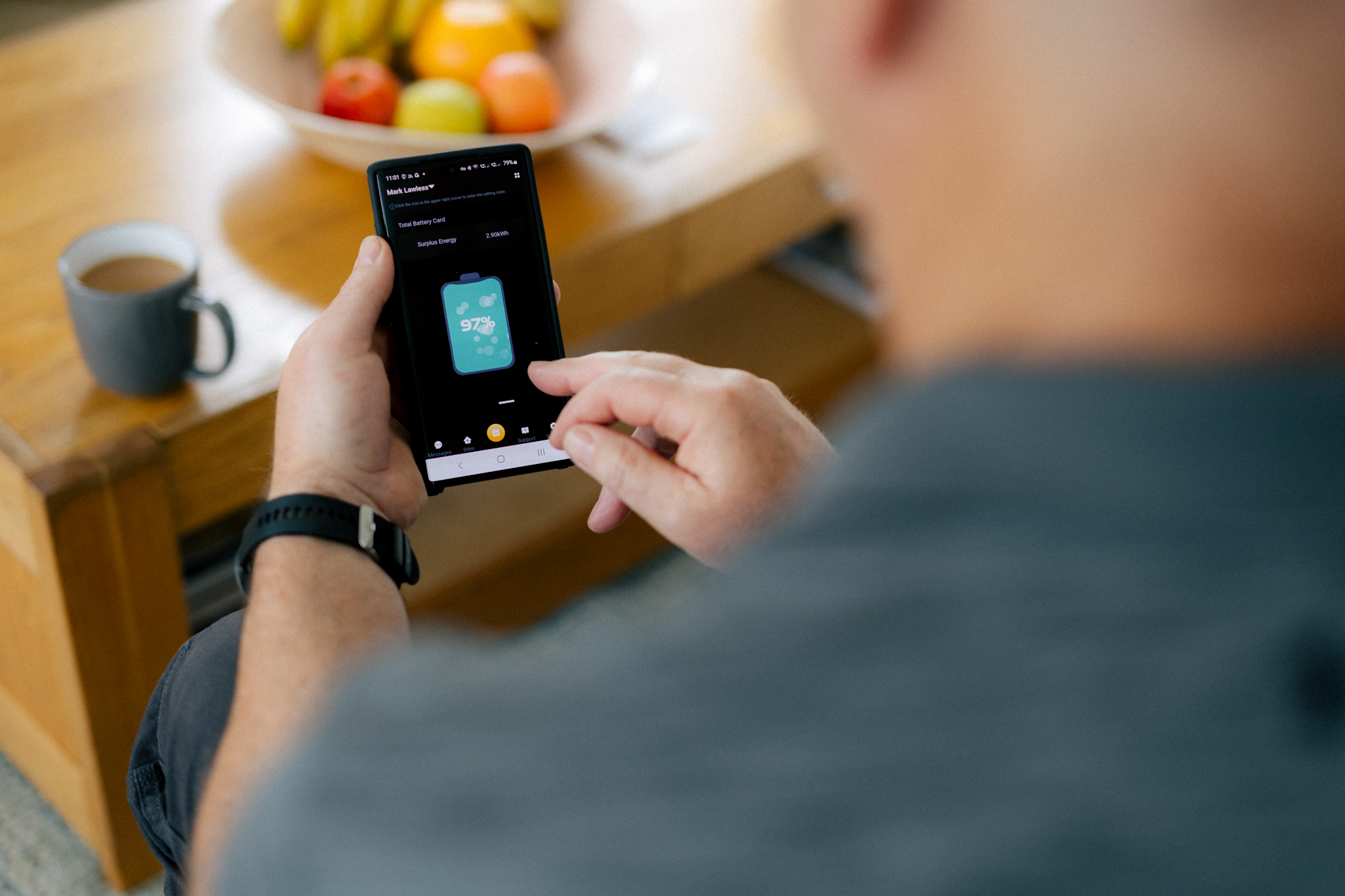
A battery stores the surplus electricity that would otherwise flow back to the grid. Your household then draws on that stored power in the evening or overnight, rather than importing from the electricity network at full unit rates.
Your export volume drops, which means lower CEG payments. But your import costs drop further.
For most homeowners, the electric battery saves more in avoided imports than it loses in export income. The trade-off works, provided the battery is sized correctly for your consumption pattern.
A system that is too small for your evening load will not offset enough imports to justify the added cost. A system that is well-matched means you charge it during the afternoon, run the house off it from around teatime onwards, and your meter barely ticks over during the hours when grid electricity costs most.
There is also a benefit that does not show up in the export calculation at all: battery storage lets you use solar-generated electricity to heat water via your immersion when your panels are producing more than the household needs. Less reliance on grid electricity for water heating, no additional cost.
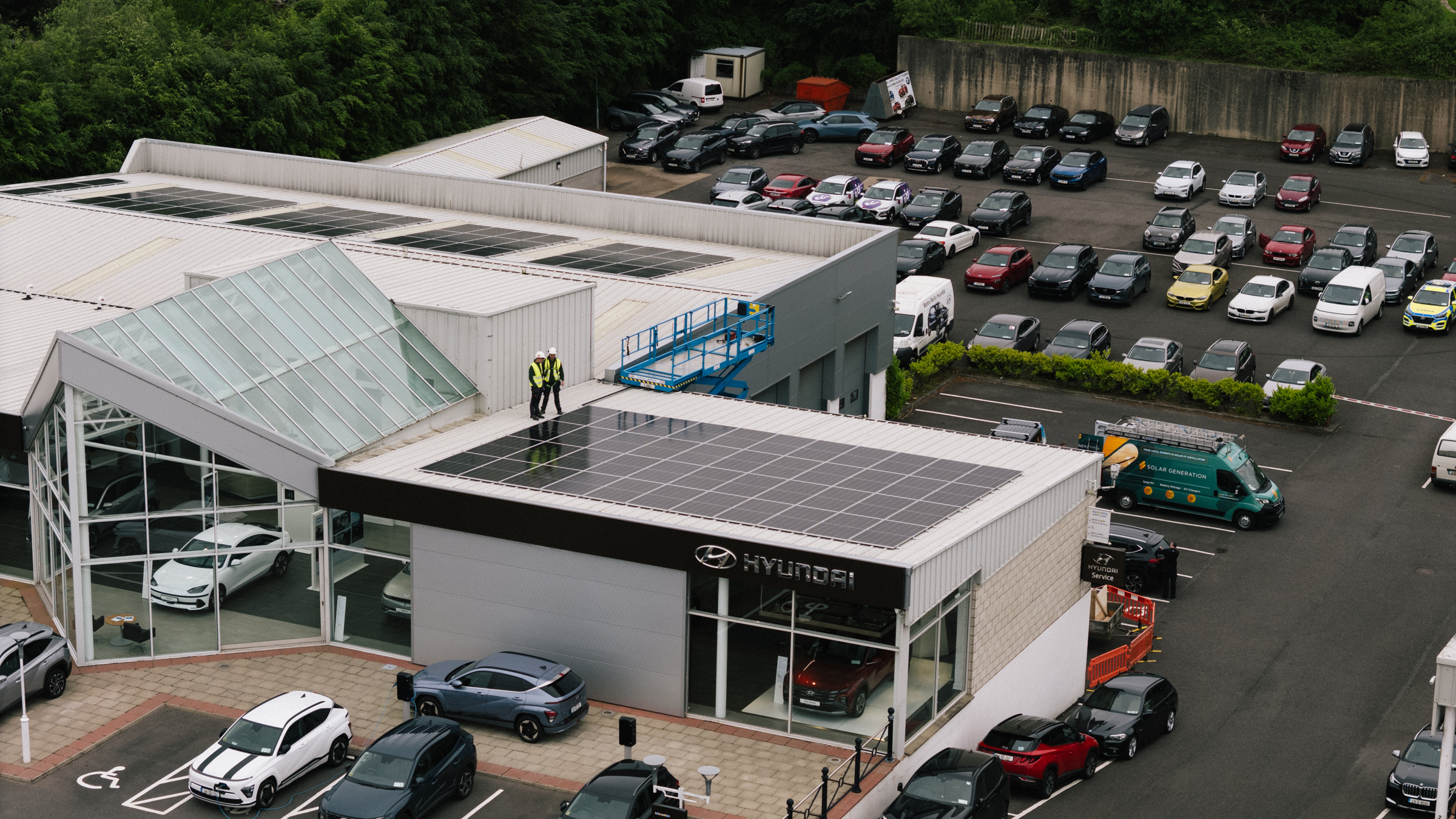
For farms and commercial properties in the North-West, battery storage often makes strong financial sense given higher daytime loads and three-phase electrical connections. For residential properties, it comes down to usage patterns and budget. Worth modelling properly before assuming either way.
What This Looks Like for Homes in the North-West
There is a version of this topic written for Dublin homeowners. Then there is the reality for homes in Sligo, Donegal, Mayo, and Leitrim.
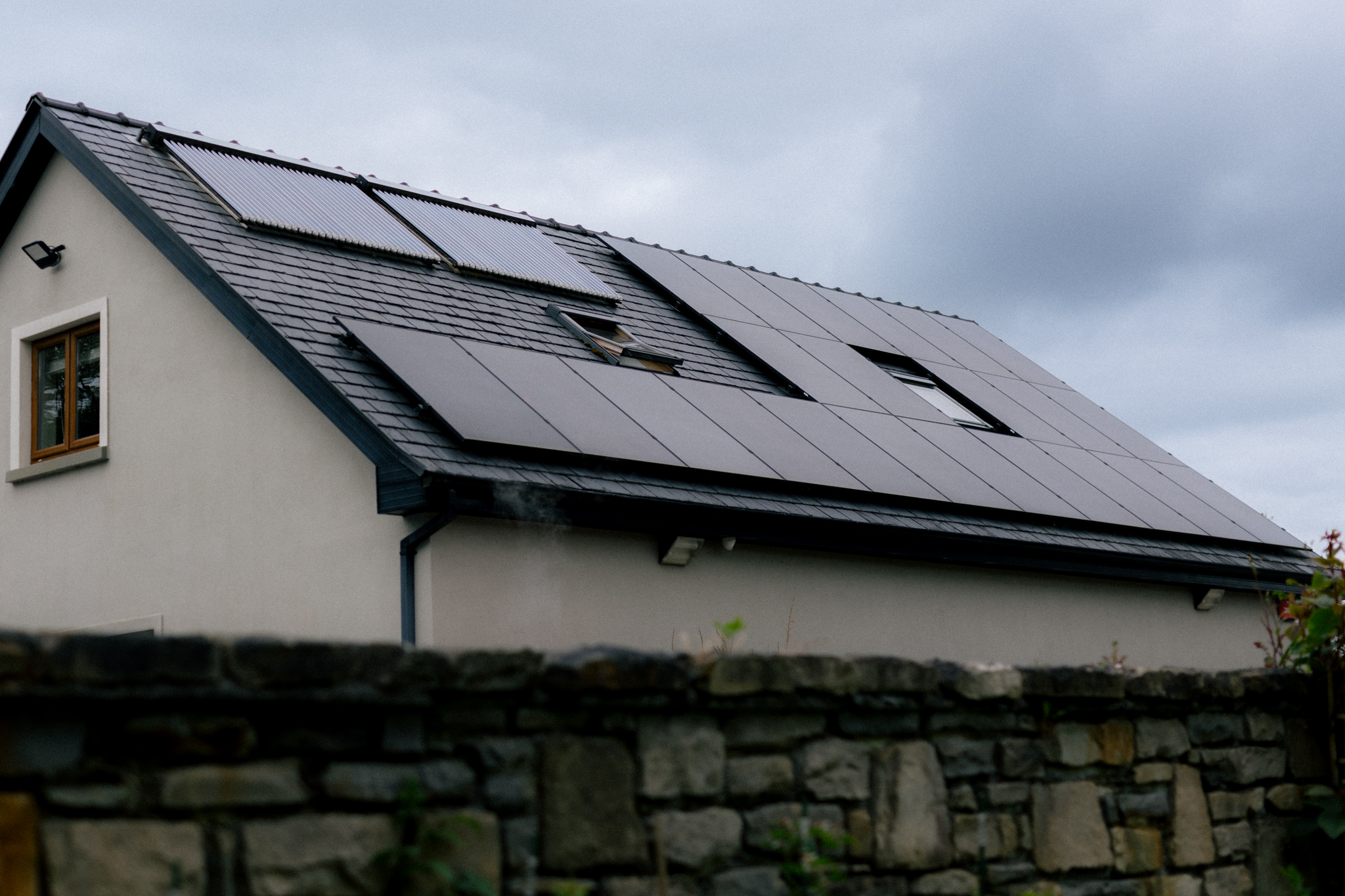
The Northwest does not get the same peak irradiance hours as the south and east. That is a fact of geography.
What it does get is a long summer day, strong spring and early autumn generation, and years of practical solar installations that tell us exactly what real systems produce on west-facing roofs in Atlantic conditions.
Generation figures for the North-West:
| South-facing roof in Sligo: roughly 850 to 950 kWh per kWp per year | Dublin: around 1,050 to 1,100 kWh per kWp | South-east: up to 1,200 kWh per kWp |
That gap matters for sizing decisions. A home that warrants a 4 kWp system in Cork might benefit from 5 or 6 kWp in Connacht to hit the same self-consumption and export profile. The nominal power of your system needs to reflect your roof, your usage, and your local generation conditions. Not a national average published somewhere on the internet.
The MSS does not penalise you for being in the North-West. Whatever renewable electricity your panels generate, you earn the same tariff rate per kWh exported. You just need a system sized for where you actually live.
Reducing your carbon footprint and your energy bills are both achievable here, at the same rate as anywhere else in Ireland.
From Installation to First Export Payment: The Full Process

Here is the full sequence, from the first nail in the roof to the first export credit on your bill.
Step 1: Installation and NC6 submission
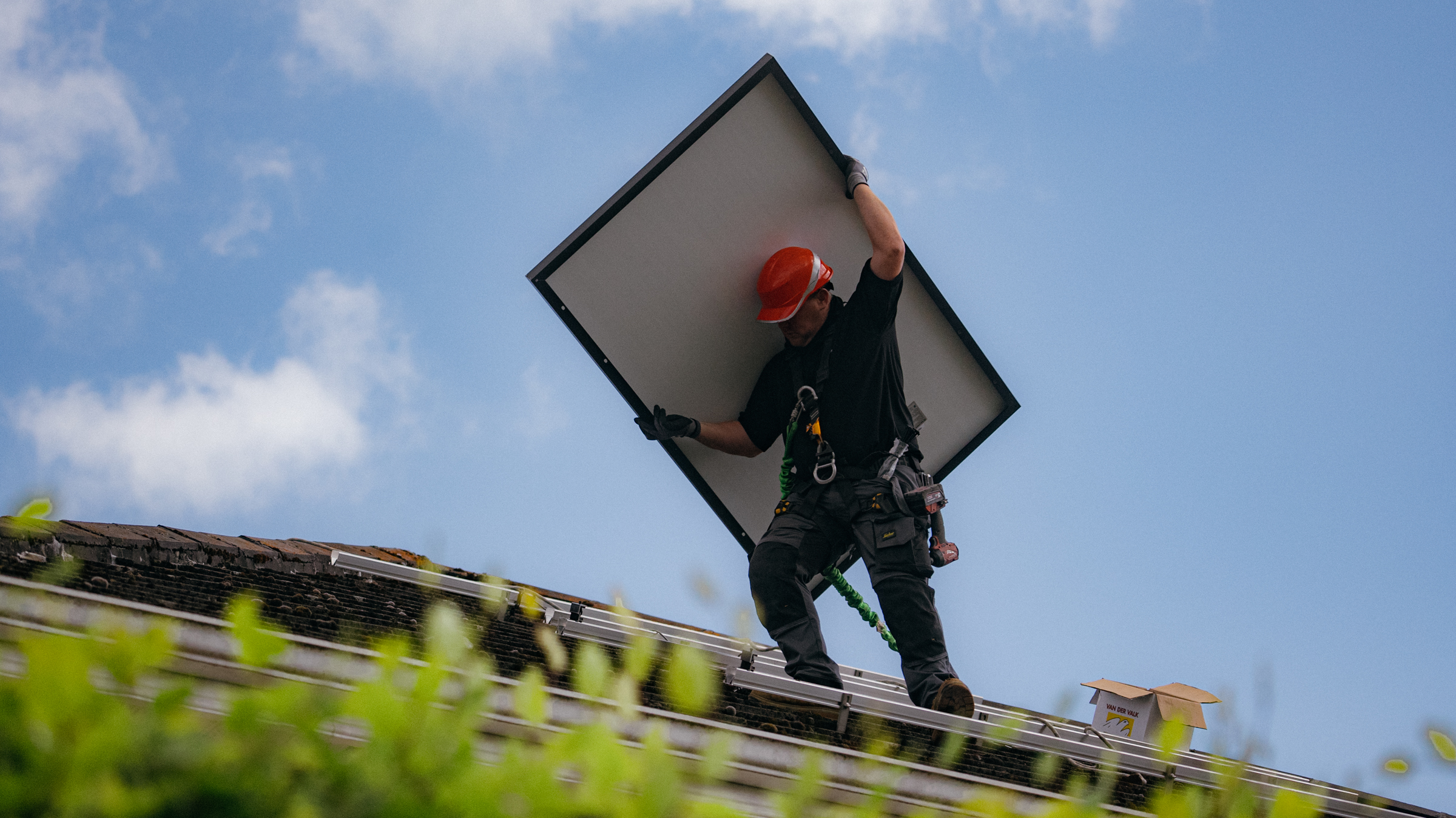
Your SEAI-registered installer fits the solar PV system and commissions it. The NC6 notification goes to ESB Networks on the same day or within a few days of completion. ESB Networks processes the notification and, if you do not already have one, arranges smart meter installation at your property free of charge.
Step 2: Register with your electricity supplier
Most suppliers have a short online form for this. You will need your MPRN (on your electricity bill), your system size in kWp, and confirmation that the NC6 has been processed by ESB Networks.
Step 3: Export credits start appearing
Once registration is in, your supplier begins recording your electricity exported to the grid. Export credits start appearing on your bill, typically within one to two billing cycles. Most suppliers pay quarterly or monthly, either as a bill credit or a direct bank transfer.
The whole process from installation to first microgeneration payment usually takes six to twelve weeks. Most of that time is waiting for ESB Networks and your supplier to process paperwork, not anything you need to actively manage.
Frequently Asked Questions
Yes, and most people do. The SEAI Solar PV Grant reduces your installation cost upfront. The MSS pays you for the renewable electricity your panels produce from then on. Separate schemes, completely compatible.
No minimum. Any registered microgeneration installation qualifies. The MSS covers small-scale generation from solar PV, micro-wind, micro-hydro, and micro-combined heat and power. Small systems participate on the same terms as large ones.
Switch freely. Every licensed supplier in Ireland is legally required to offer a CEG tariff, so your payments continue regardless of who you are with. Rates vary between suppliers, and switching can actually improve your export earnings if your current provider’s tariff is below market.
No. Once your system is registered and your smart meter is active, payments continue automatically.
The SEAI Solar Grant is not available for homes built after 2021. Export payments under the MSS are. The grant and the export scheme are governed separately, so newer homes can still earn CEG payments without ever having received a grant.
Microgeneration covers small-scale electricity generation from renewable technologies up to 50 kWp for residential connections. That includes solar PV, micro-wind, micro-hydro, and micro-CHP. Larger commercial installations fall under different grid connection rules and sit outside the MSS.
What Your Roof Could Actually Earn
The export figures in this article are indicative. What your system will actually generate, save, and export depends on your roof orientation, your household consumption, your system size, and how the installation is matched to your property.
At Solar Generation, we have carried out solar PV installations across Sligo, Mayo, Donegal, Leitrim, Roscommon, and North Galway. Every installation includes NC6 submission, SEAI Solar PV Grant application, and smart meter coordination. You do not deal with any of that yourself.
If you want the actual numbers for your property, our team will give them to you before you commit to anything.
Call us on 071 931 0111 or request your free quote online.
Solar Generation is an SEAI-registered solar PV installer based in Sligo, serving homeowners and businesses across the North-West of Ireland.